It never fails to astound me how Baldur’s Gate 3 manages to keep its secrets hidden even after countless journeys through Faerûn. I’ve lost count of my playthroughs—heroic paladins, scheming warlocks, rangers with hearts of gold—and yet, just when I think I’ve seen every possible twist the Emerald Grove can offer, a new, heartbreaking thread emerges. Last week, while idly scrolling through community discussions, I came across a revelation that made me drop everything and fire up a fresh campaign immediately. The scene involved Komira, the tiefling mother mourning her daughter Arabella, and Kagha, the interim archdruid whose serpentine cruelty has long been a point of contention. What followed was a moment so raw and so painfully human that it reshaped my entire perception of consequence in this masterwork of interactive storytelling.
The catalyst for this narrative turns on a seemingly small failure: Arabella’s theft of the Idol of Silvanus and the ensuing confrontation with Kagha’s viper, Teela. On my first dozen runs, I always talked Kagha down or simply intimidated her into releasing the child. The idea of letting the snake do its work was unthinkable; it felt like leaving a piece of myself behind in that stone chamber. But this time, driven by morbid curiosity and the knowledge that an undiscovered outcome lurked behind that dreadful choice, I stood motionless. The hiss of scales, a terrified shriek, and then silence. Arabella crumpled to the floor, her tiny form still. The grove fell into a hollow quiet that no amount of ambient birdcall could mask. I wanted to reload immediately, but the ghost of a promise—that something I’d never witnessed waited ahead—kept me moving.
Kagha remained unchallenged for the moment. I unearthed her clandestine ties to the Shadow Druids, of course, yet I deliberately allowed her to cling to power, watching as her arrogance battled with the first cracks of doubt. Against the goblin horde, the grove stood victorious; the tiefling refugees celebrated with wine and firelight, their survival a bittersweet triumph. It was during that celebration, amid the crackle of bonfires and forced laughter, that vengeance took shape. Komira and her husband Locke had been conspicuously somber throughout the revelry, their eyes fixed on Kagha with a laser intensity that even the game’s superb dialogue camera couldn’t ignore.
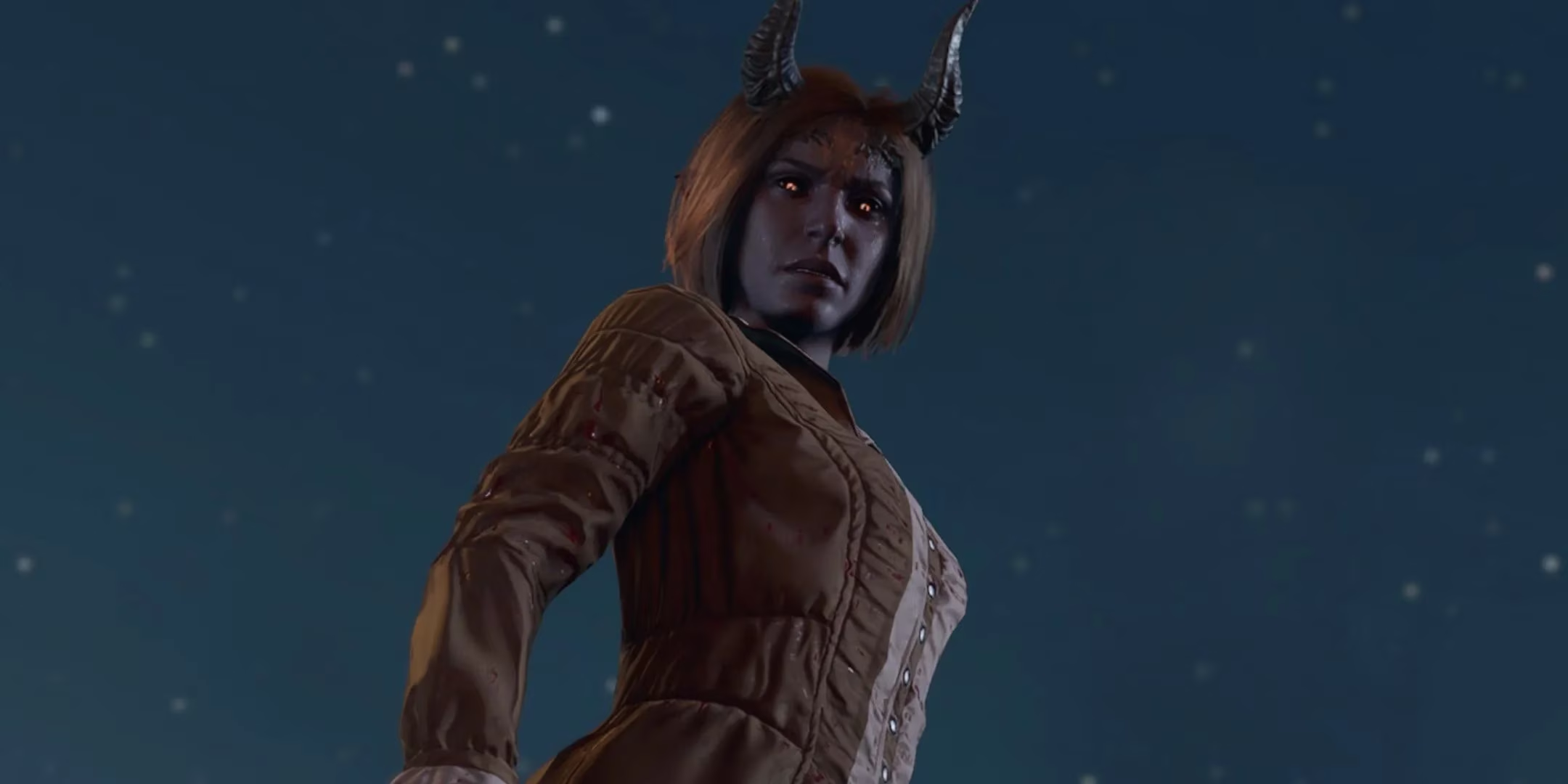
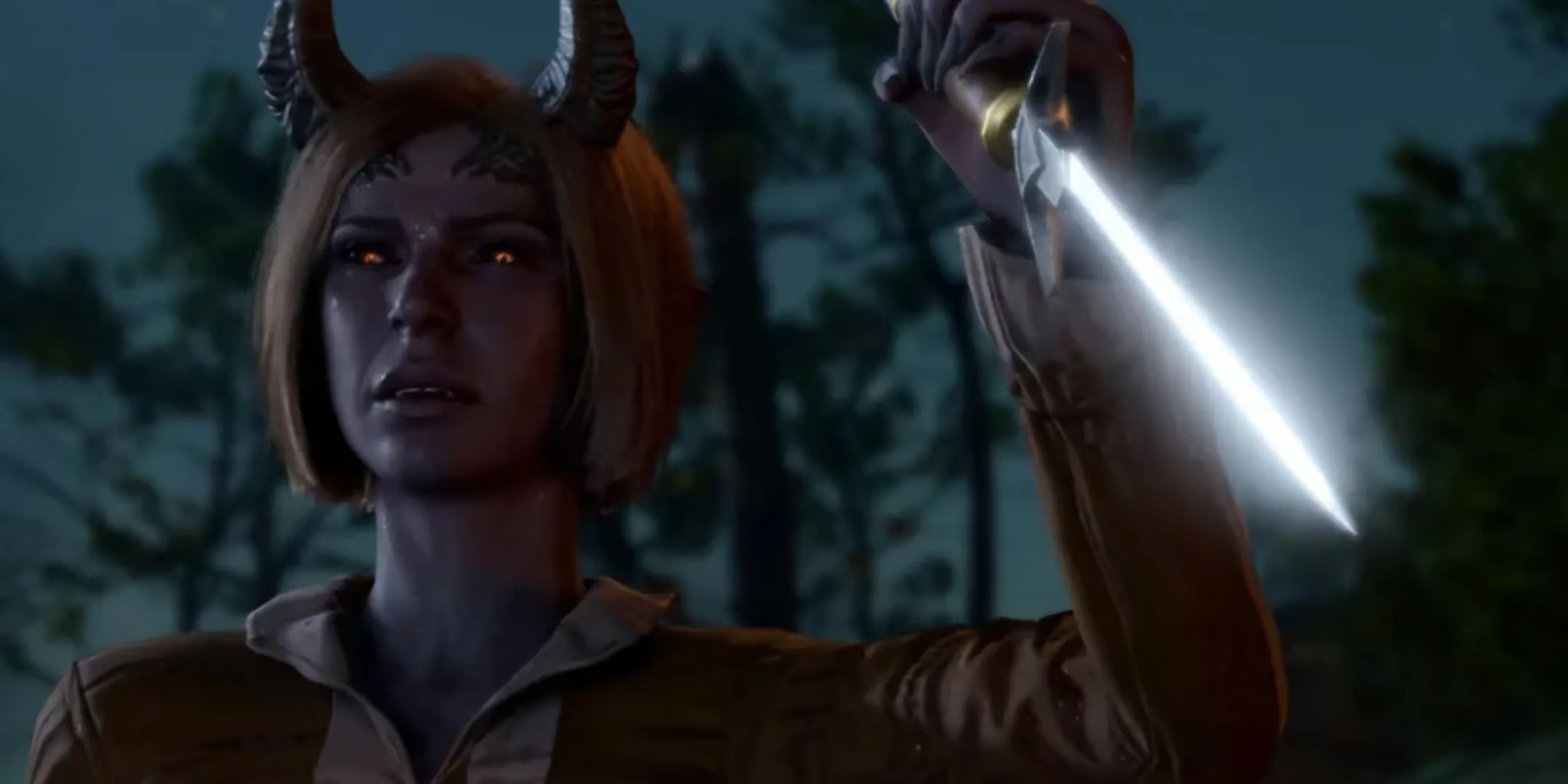
As the party reached its crescendo, Komira approached the druid leader with a chalice. The air thickened. Kagha, in a rare display of vulnerability, accepted the offering—only to choke and stagger as the poison took hold. What followed wasn’t some off-screen fade or a brief line of text; it was a fully animated, voiced, and deeply disturbing assassination. Komira leaned in close, her voice trembling with grief-fueled rage, and uttered words that will stay with me forever: “Her name was Arabella. Picture her. How scared she was. And know – this will hurt.” With a brutal, finality-laden motion, she drove a blade into Kagha. The tiefling mother didn’t flee, didn’t scream for help. She simply stood there, watching the life drain from the druid who had callously allowed a child to die.
I stared at the screen for a long minute, completely captivated. The reason this scene is so extraordinarily rare is its razor-thin triggering conditions. A truly evil run would typically see you raiding the grove alongside Minthara, slaughtering everyone involved before any party could occur. A morally upright run, on the other hand, would save Arabella with a simple persuasion check or a quick shove. The path I had walked—allowing a child’s death but still defending the grove—occupied a cruel no man’s land that felt disturbingly realistic. It wasn’t mustache-twirling villainy; it was passive malice, a sin of inaction that the game punished with something far more haunting than a game over screen.
What I hadn’t anticipated was how this event intersected with the game’s intricate class mechanics. In a subsequent attempt, I rolled a paladin sworn to the Oath of Vengeance, a calling that demands swift retribution against wrongdoers. When the moment came to dissuade Komira and Locke from their plan, I stepped in, arguing that cold-blooded murder would stain their souls. The instant the words left my avatar’s lips, the Oathbreaker Knight materialized, his voice heavy with disappointment. My oath was broken—not because I prevented an act of revenge, but because I stood against parents delivering justice for a slain innocent. The moral calculus of the game had judged me, and it found my mercy wanting. This tiny nuance, where a paladin’s righteousness clashes with its own tenets, blew my mind. It proved that Larian had woven ethical paradoxes into even the bleakest corners of the narrative.
There is yet another layer of complexity that emerges if you unravel Kagha’s shadowy affiliations earlier. After exposing her collusion, the archdruid can genuinely repent, expressing sorrow for Arabella’s death and attempting to atone. Suddenly, that revenge scenario twists into a gut-wrenching dilemma: do you shield a reformed woman from the grieving parents she wronged, or do you stand aside and let nature’s oldest cycle—an eye for an eye—play out? I tried both. Protecting Kagha felt like a hollow exercise in forgiveness, while witnessing her death a second time, knowing she had truly changed, planted a cold stone of regret in my stomach. The game refuses to offer a clean resolution; it just holds up a mirror to your soul and demands that you reconcile the fragments.
Experiencing this hidden gem in 2026, well past the hype cycle and after hundreds of hours logged, reaffirmed why Baldur’s Gate 3 will be dissected for decades to come. The Komira-Kagha confrontation isn’t about loot or XP; it’s a masterclass in reactive storytelling that respects the player’s capacity for sorrow, outrage, and contemplation. It taught me that inaction is a choice as weighty as any blade swing, and that some of the game’s most powerful moments never appear in achievement lists or community guides. I closed my laptop that night with a newfound reverence for the tiefling refugees and for the quiet corners of the Emerald Grove where love and fury intertwine in the most unexpected of ways.