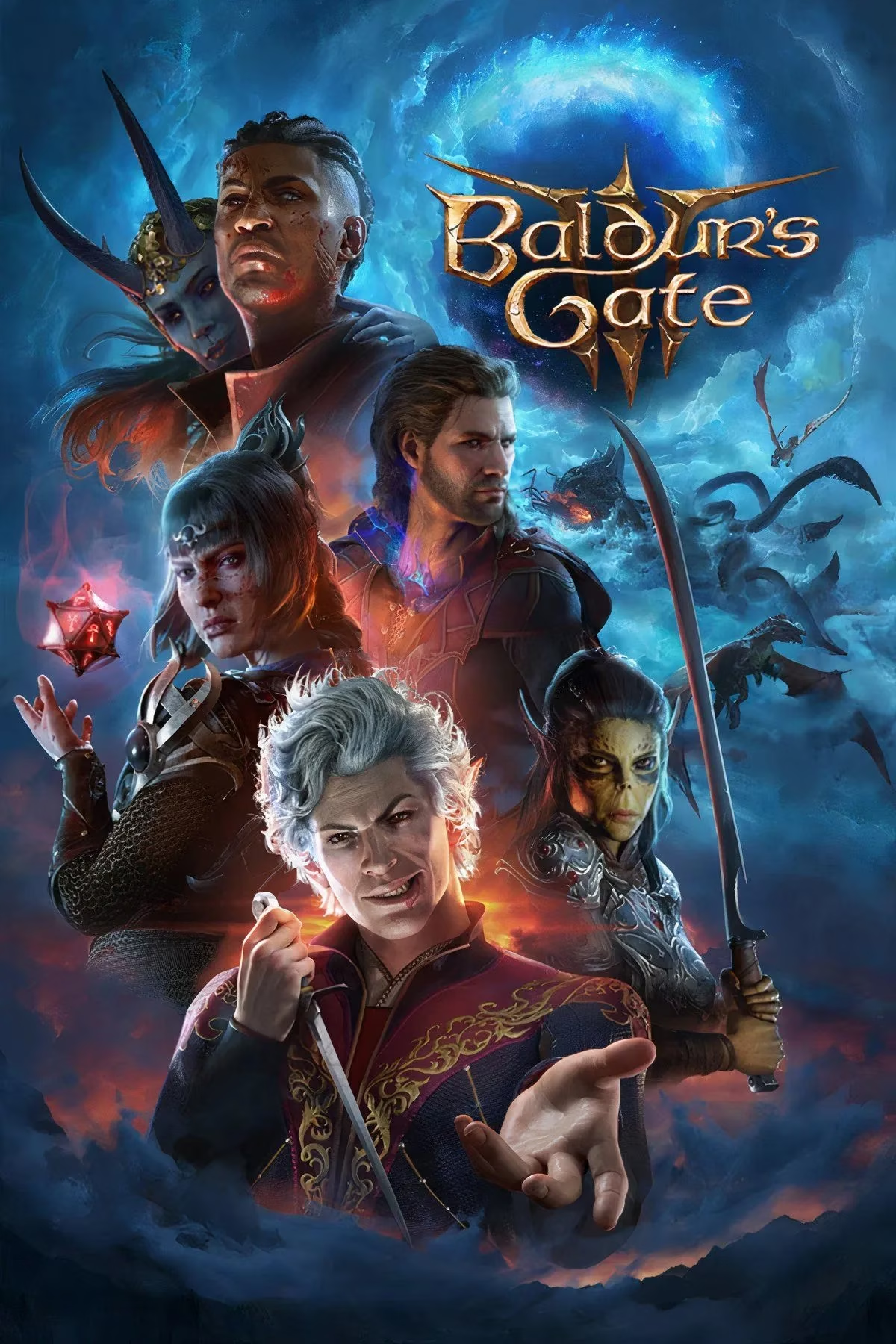
When Larian Studios released Patch 7 for Baldur's Gate 3, the update did more than expand the RPG's evil routes. It gave the six Origin characters — Wyll, Karlach, Gale, Lae'zel, Astarion, and Shadowheart — dedicated dark finales. In 2026, those scenes remain one of the game's most discussed additions, because they answer a thorny question: what happens when the kindest companions are handed absolute power and asked to choose?

The structure is shared. After the Elder Brain is defeated and captured, the chosen Origin stands above a ruined Baldur's Gate. The narrator frames the character's central desire and explains how old problems now seem trivial. Personalized dialogue follows. Then, as the character descends and forces the population to kneel, an option at the top of the list unlocks a unique cut scene. Larian had faced criticism that evil playthroughs lacked content, and Patch 7 answered with a set of Tav and Dark Urge evil endings plus one unique evil ending for each Origin. The result is not a simple victory lap. It is a study in corruption, self-delusion, and the cost of freedom without restraint.
6. Wyll Ravenguard: Peace Through Tyranny 👑
Wyll's original path rejects the title of Duke of Baldur's Gate. He chooses the Blade of Frontiers, fights devils, and accepts a grim fate. His evil ending reverses that choice. Influenced by Mizora or by his own flawed belief in enforced peace, Wyll becomes Duke Ravenguard and transforms everyone with a tadpole into a mindflayer. The logic is chilling: if the people are completely subservient to their leader, peace is guaranteed. Wyll's dark finale shows how a hero's desire to do good can curdle into dictatorship. He is not a sadist. He is a tyrant who believes the ends justify the means, which makes him just as dangerous as a ruler who wants suffering.
5. Karlach: The Heart That Burns the World 🔥
Karlach is known for her big heart and Chaotic Good alignment. Her evil ending dismantles that identity. In a trademark monologue, she decides the fate of Baldur's Gate and the cowering people below. Playfully, she summons a horde of devils from Avernus to tear the population apart. Her reason is pettiness: the people chose Gortash as their protector. The scene also twists her infernal engine. Karlach's heart is the cause of her predicted death, because Faerûn's climate cannot withstand the heat her body emits. In a good story, she might accept death rather than return to Avernus or endanger others. In this ending, she tears out that heart and burns the world around her for the glee of it. The fun-loving tiefling accepts the devil's role others once feared she would become.
4. Gale: A Mortal's War Against the Gods ⚡
Gale's relationship with the gods is turbulent. His ambition is never fully hidden, and his pride is poorly masked. Without anyone to calm his desire for a seat in the heavens, Gale wages war against the divine. In his evil ending, his lust for power is sated, but his place as a god is not secured. The people of Baldur's Gate fall under his dominion and destroy images of Mystra and other gods. Gale then opens a portal for his march against the celestial order. The ending is not a wild leap. His jovial behavior and jokes act as a smoke screen for his feelings of inadequacy when he compares himself with the gods. When given power of an evil nature rather than the celestial kind available in a good run, Gale wants to show the gods — whom he sees as arrogant observers — a taste of mortal wrath. It is almost understandable, which is what makes it unsettling.
3. Lae'zel: The New Lich-Queen 🐉
Lae'zel's evil ending embraces aspects of her character that appear in her first meeting and are later sharpened by her disdain for Vlaakith. She takes to the skies on a red dragon and intends to cast Vlaakith from her perpetual throne. In her good endings, she does so with a silver sword at her side. In this version, she commands an army of mindflayers and loyal githyanki. The key difference is her ideal. Lae'zel wanted to free the githyanki from an oppressive queen and would never accept illithid power to do so. In her evil ending, she openly embraces that power and proclaims herself the new Lich Queen. Freedom no longer tastes sweet enough; replacing the current power structure with her own does. The scene turns a liberation story into a succession story, with a new tyrant wearing the old crown.
2. Astarion: The Monster Cazador Created 🩸
If any character fits the role of Absolute Leader with ultimate power, it is Astarion. Upon ensnaring the Elder Brain, he achieves everything he desired: endless protection from the sun, loyal followers who love him, and the chance to stand at the top rather than scheme and prowl at the bottom. Even with mindflayer power at his fingertips, the narrator hints at a lingering desire for acceptance and a place in the world. In standard Astarion fashion, he cannot resist being deceitful even while holding power over those kneeling before him. He does not need to pretend to be a benevolent new king before letting his vampire spawn herd feast on the helpless population, but he does. His evil ending makes him everything he tried to break away from: a more murderous Cazador. Astarion is weak to gifted power and embraces the darker side of his character, becoming the monster Cazador created.
1. Shadowheart: Breaking Free Into Oppression 🌑
Shadowheart's evil ending focuses on a false freedom from the constraints of faith. Throughout Baldur's Gate 3, she is chained by her service to Shar. Even when she steps out of the shadow, she can embrace her side as a Selûnite. She may be freer when she spares the Nightsong, but faith remains a major part of her characterization. With ultimate power, she is no longer trapped between two warring goddesses. She can create a new faith in her image, ironically mimicking what Shar and Selûne represent. Her new followers brutally slaughter the followers of both goddesses, and Shadowheart leans into everything she learned to detest. When finally given freedom to choose without restraint, an evil Shadowheart cannot escape the reality of her past. Her mind is forever warped by the concept of faith; only now, her people worship her.
| Character | Evil outcome | Core theme |
|---|---|---|
| Wyll | Duke Ravenguard turns tadpoled people into mindflayers | Enforced peace |
| Karlach | Summons devils and burns Baldur's Gate | Betrayed heart |
| Gale | Leads a war against the gods | Wounded pride |
| Lae'zel | Becomes the new Lich Queen | Liberation turned domination |
| Astarion | Rules as a new Cazador | Abuser reborn |
| Shadowheart | Creates a new faith through slaughter | False freedom |
The six endings share a bitter irony: each character becomes a version of what they feared or opposed. Wyll becomes a tyrant. Karlach becomes the devil others saw. Gale becomes the god he resented. Lae'zel becomes a queen like Vlaakith. Astarion becomes Cazador. Shadowheart becomes a goddess who demands worship. For players returning to Baldur's Gate 3 in 2026, these routes remain a strong argument that evil campaigns can be more than cruelty for its own sake. They are character studies in how power reveals, distorts, and completes a person. The darkest outcome is not chaos for chaos's sake. It is the moment a companion chooses to stop resisting the worst version of themselves.