When Dragon Age: The Veilguard was preparing to step into the spotlight in late 2024, the mood around it felt like a party where half the guests were ready to dance and the other half were checking their watches. The game had spent years twisting and turning, searching for the right shape. Some players were thrilled, others were bracing for disappointment. Then Michael Douse—publishing director of Baldur's Gate 3—spoke up. And let's be real, when someone from the studio behind one of the most decorated RPGs in recent memory talks, people tend to lean in.
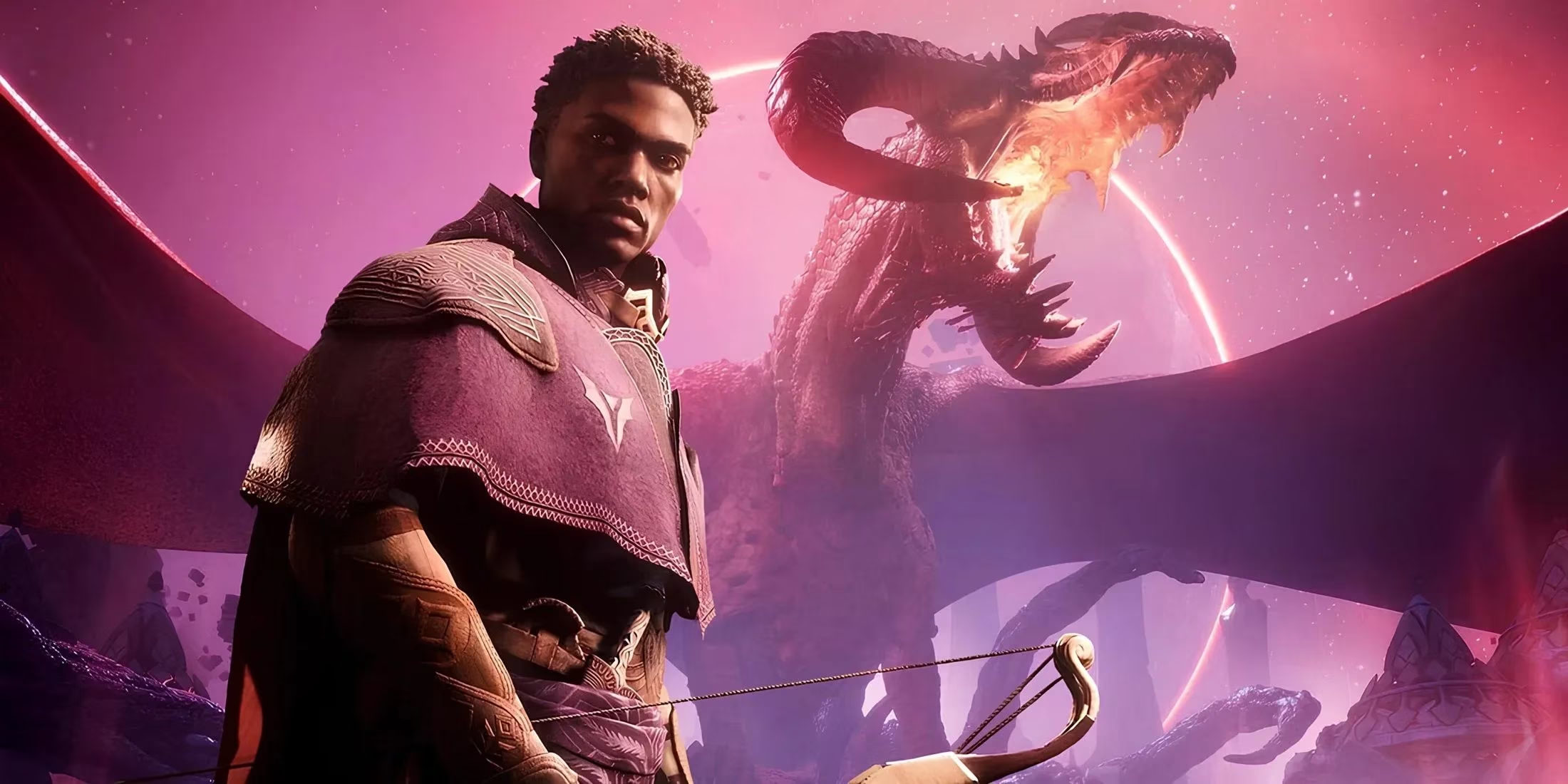
A Long Road to Launch
The fourth Dragon Age entry had been announced back in 2018. During development, it changed its name from Dragon Age: Dreadwolf to Dragon Age: The Veilguard, and it also reshaped several gameplay ideas. When the first official trailer dropped, reactions were mixed. Some fans weren't sold on the art style, and old doubts about BioWare began to surface again. That uncertainty hovered over the game like a stubborn cloud.
A Voice That Carried Weight
Then came Douse, who had spent a few weeks playing The Veilguard before launch. He did not offer the kind of bland "looks great" comment you often hear before a big release. Instead, he compared it directly to Baldur's Gate 3, saying the experience was "compatible" with what Larian's blockbuster had delivered.
That mattered. Baldur's Gate 3 had sold over 10 million copies, won multiple Game of the Year awards, and essentially became the new measuring stick for modern RPGs. So when its publishing director gave The Veilguard a nod, it felt like a veteran player dropping a rare bit of gear into a newcomer's inventory. Talk about a confidence boost.
What Douse Actually Said
Douse described The Veilguard as a "well-made, character driven, binge-worthy Netflix series" with a strong sense of propulsion and momentum. He praised the combat system as "brilliant," far better than what you normally find in action games. Then he added the line that probably made more than a few fans pause:
The Veilguard "feels like the first Dragon Age game that truly knows what it wants to be."
That was the kind of sentence that suggested the game had stopped apologizing for what it was and finally picked a direction. But Douse also reminded people that The Veilguard was not Dragon Age: Origins. Some longtime fans might feel that distance. That was not necessarily a flaw; it was simply a different animal. The Veilguard had grown sleeker, more confident, and less interested in living inside the shadow of its ancestors.
Early Reviews Painted a Healthy Picture
Before launch, the first wave of reviews was already rolling in. The Veilguard sat at an average score of 83 on OpenCritic across 50 reviews. It was not the towering 96 that Baldur's Gate 3 had reached, but an 83 was still a solid, healthy number. It suggested a game that had learned how to land on its feet, even with the weight of expectations pressing down.
| Title | OpenCritic Score |
|---|---|
| Baldur's Gate 3 | 96 |
| Dragon Age: The Veilguard | 83 |
Scores, of course, were only part of the story. Some players would love the sharper combat, while others would miss the slower tactical rhythms of older Dragon Age games. But the early signals pointed toward something important: this was not a broken mess stumbling toward release. It was a game with a clear sense of purpose.
...
Now, in 2026, that pre-launch moment reads like a quiet turning point. Dragon Age: The Veilguard launched on October 31, 2024, for PC, PS5, and Xbox Series X/S. The praise from Douse and the early reviews did not erase every criticism, but they gave the game something more valuable—permission to be judged on its own terms.
Maybe that was exactly what The Veilguard needed all along. Not to be Dragon Age: Origins. Not to be Baldur's Gate 3. Just to be itself, finally.