In the sprawling world of video games, spiders have long been typecast as mandatory dungeon pests and monstrous final bosses, their digital forms often triggering arachnophobia filters into existence. Yet, a quiet revolution is unfolding in the realms of Baldur's Gate 3, where these eight-legged creatures are no longer mere XP fodder. For the community of arachnid admirers—those who cherish tarantulas as pets and see beauty in silken webs—this game has become an unexpected sanctuary. The revelation that players can engage with spiders through dialogue and persuasion, rather than violence, has sparked a wave of joy and thoughtful gameplay, transforming routine encounters into moments of connection and strategic diplomacy.
A Web of Positive Interactions 🕷️💬
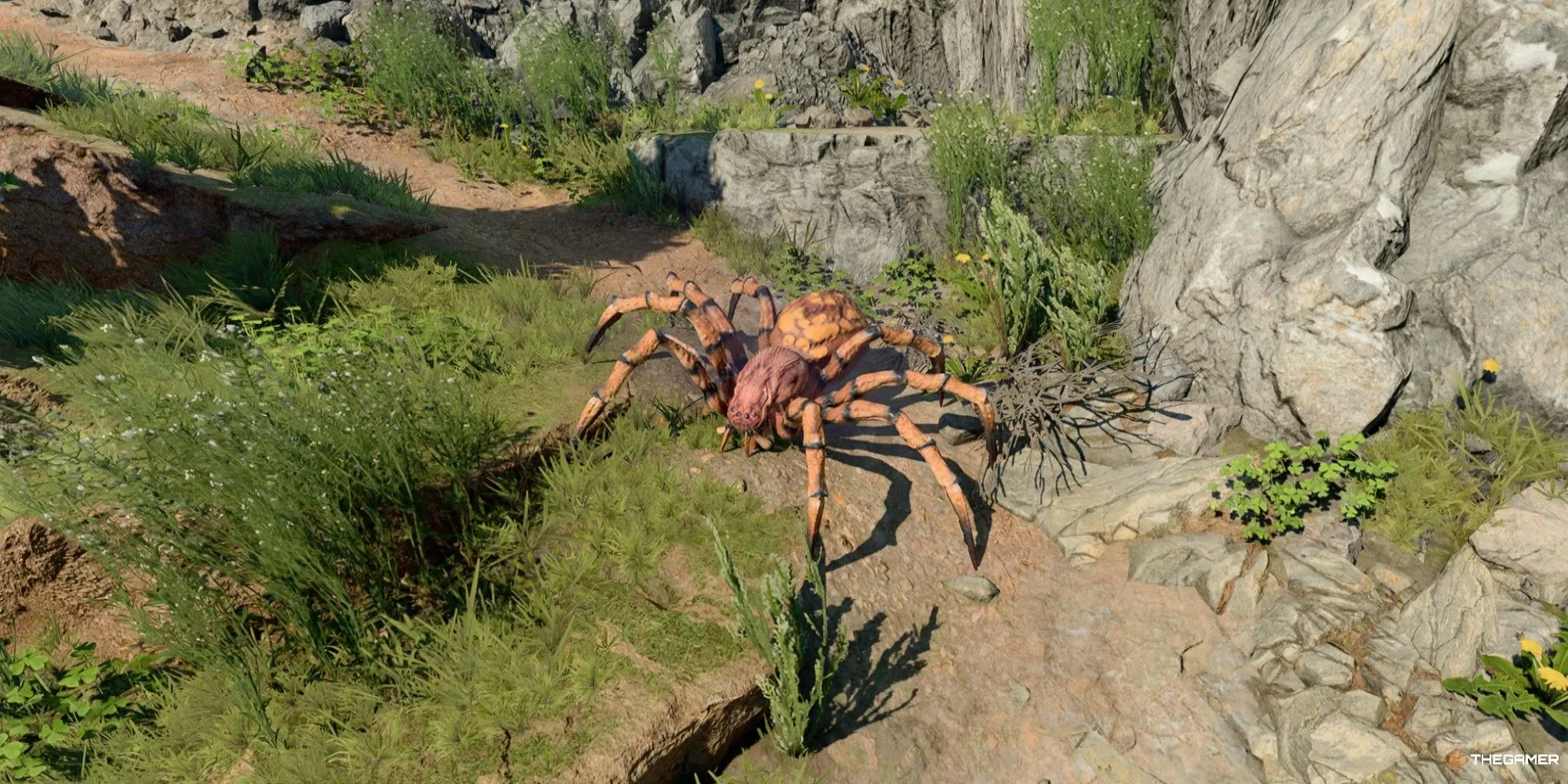
The discovery, widely celebrated on forums, centers on the ability to communicate with giant spiders. As one enthusiast shared, the experience of persuading a spider to abandon its cruel master and simply "go home" felt like finding a secret garden in a concrete jungle—a rare, verdant surprise in a genre often painted in shades of combat gray. This isn't just a quirky feature; it's a narrative thread that allows players to reshape encounters:
-
In Grymforge, you can diplomatically convince enslaved spiders to quit their jobs, effectively making enemy forces unravel like a poorly knit sweater.
-
At the goblin camp, rescuing and freeing captive spiders offers them a new home, turning a cleared area into a safe haven for these misunderstood beings.
The impact is profound: players report feeling a sense of moral satisfaction, as if they've mended a tiny tear in the universe's fabric, one silken thread at a time.
Why This Matters Beyond the Game 🌐
For spider lovers, this design choice is more than a gameplay mechanic; it's a cultural acknowledgment. In a medium where arachnids are often reduced to creepy-crawly clichés, Baldur's Gate 3 treats them with agency and personality. The ability to interact positively challenges the ingrained "kill-on-sight" mentality, much like a skilled translator bridging two ancient, feuding languages. This resonates deeply with those who keep real spiders as pets, seeing them not as monsters but as delicate, fascinating companions. The game subtly educates players, suggesting that understanding can replace eradication—a lesson as valuable in fantasy as in reality.
Embracing the Eight-Legged Allies 🎮
Many players, accustomed to unleashing fireballs at the first sign of a health bar, have been pleasantly surprised. One admitted, "I had no idea talking was an option," vowing to try diplomacy in future playthroughs. This shift encourages replayability and role-playing depth. Consider the benefits of befriending spiders:
| Approach | Outcome | Player Experience |
|---|---|---|
| Combat | Immediate loot, potential party damage | Routine, action-oriented |
| Persuasion | Non-violent resolution, narrative rewards | Unique, emotionally engaging, strategic |
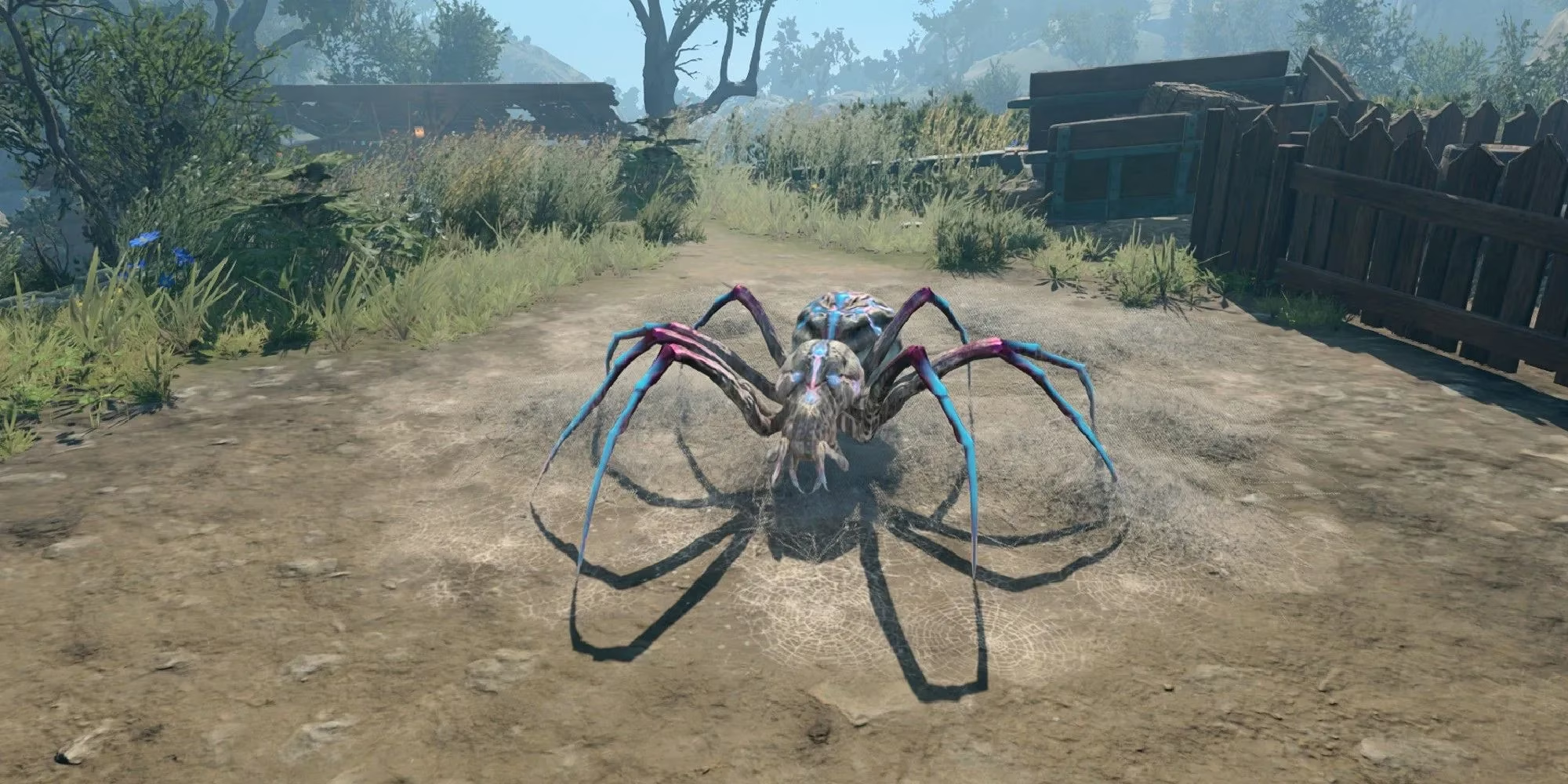
The latter can turn a spider encounter into a strategic masterpiece, where words become as sharp as swords, slicing through conflict without drawing a single drop of blood.
The Ripple Effect in Gaming 🕸️✨
As of 2026, Baldur's Gate 3's spider-friendly design is inspiring other developers to rethink creature interactions. It proves that inclusivity in gaming isn't just about representation of people, but also about broadening our empathy toward virtual fauna. For spider enthusiasts, this feels like a long-overdue correction, a digital olive branch extended after years of pixelated persecution. The game weaves a subtle metaphor: these spiders, with their intricate webs, mirror the complex choices players face—each thread a decision that can either entrap or connect. In embracing them, we learn that sometimes the bravest quest isn't to slay a monster, but to understand it, turning feared adversaries into unexpected guardians of our moral compass. So, next time you spot those eight legs in Faerûn, remember: a conversation might just spin a tale more rewarding than any battle.