Baldur's Gate 3 has never been shy about letting players break the action economy. In 2026, the game's 12 official classes still leave room for absurd party builds, and the Artificer remains a mod-first curiosity for many players. Among those builds, the summon army is the one that turns a tactical RPG into a very slow, very crowded board game. The idea is simple: stack as many allies as possible, then let the action economy do the heavy lifting. The execution is where things get spicy.
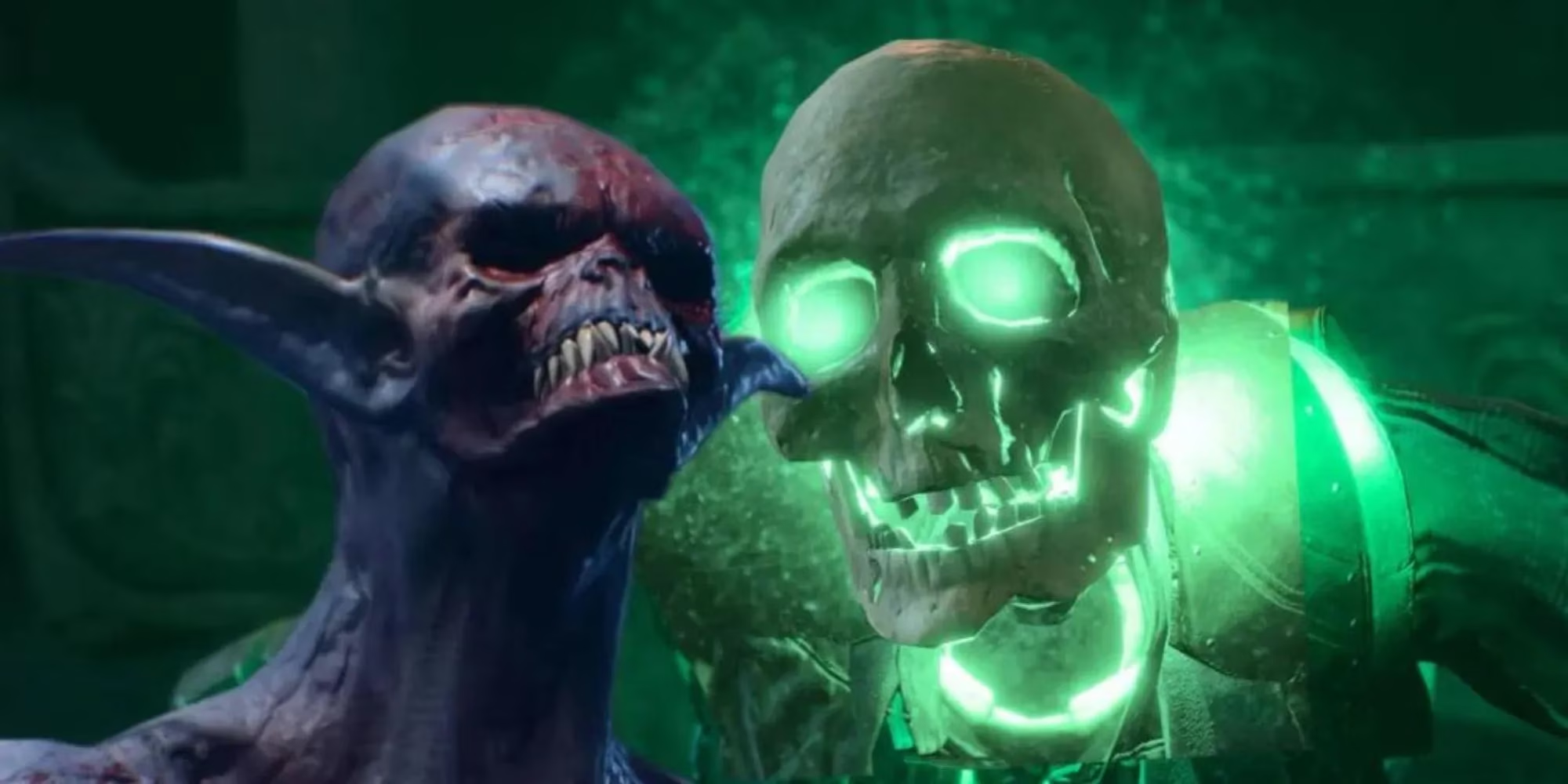
Not every party resists the Absolute, but the ones that do often feel pressure to raise an army for the fights ahead. Act 3 stacks encounters high, and boss battles such as Ketheric Thorm at the end of Act 2 or Raphael in Act 3 tempt players toward any advantage they can find. The two standout classes for this plan are the Circle of Spores Druid and the Necromancy Wizard. Neither class is a secret weapon, exactly. Together, though, they can make a battlefield look like a convention for the undead.
The Summon Stack at a Glance
| Piece of the puzzle | What it adds | Notes |
|---|---|---|
| Circle of Spores Druid | Fungal Zombies, melee zombies, archer skeletons, minor elementals, dryads, wood woads, and elementals | A widely shared Reddit experiment by thatdude333 respeced all four party members at level 9 and produced 48 summons |
| Necromancy Wizard | Danse Macabre and upcast Animate Dead | Danse Macabre summons four uncontrollable ghouls; upcast Animate Dead can bring three skeletons, zombies, ghouls, or flying ghouls |
| Temporary summons | Mage Hand, Flaming Sphere, Spiritual Weapon, and Find Familiar | These add bodies and options, but also add turn-management clutter |
| Scroll tricks | 'Reverse pickpocketing' summoning scrolls into a summon's inventory | Theoretically expands the army; practically fiddly to execute |
The Circle of Spores Druid is popular with players who enjoy commanding as many summons as possible. In the Reddit example, four level-9 party members each summoned 12 different allies. That is 48 bodies before anyone starts counting temporary summons or scroll tricks. The Necromancy Wizard pushes the same idea further. A Wizard who has read the Necromancy of Thay tome can cast Danse Macabre for four uncontrollable ghouls, and an upcast Animate Dead adds three more skeletons, zombies, ghouls, or flying ghouls depending on the spell level. Temporary summons such as Mage Hand, Flaming Sphere, Spiritual Weapon, and Find Familiar also join the party. Then there is the inventory game: placing a summoning scroll in a summon's inventory, often called reverse pickpocketing, can give that summon the power to call even more allies. With enough distinct spells, scrolls, and creative bookkeeping, the theoretical ceiling can climb into triple digits.
The game's clearest limit is duplicate casting. If a summoning spell is cast more than once, the previous summons are dismissed, even when a scroll is used. Different summoning spells, however, stack. That is the dream, at least: a party that answers every problem with a wall of disposable allies.
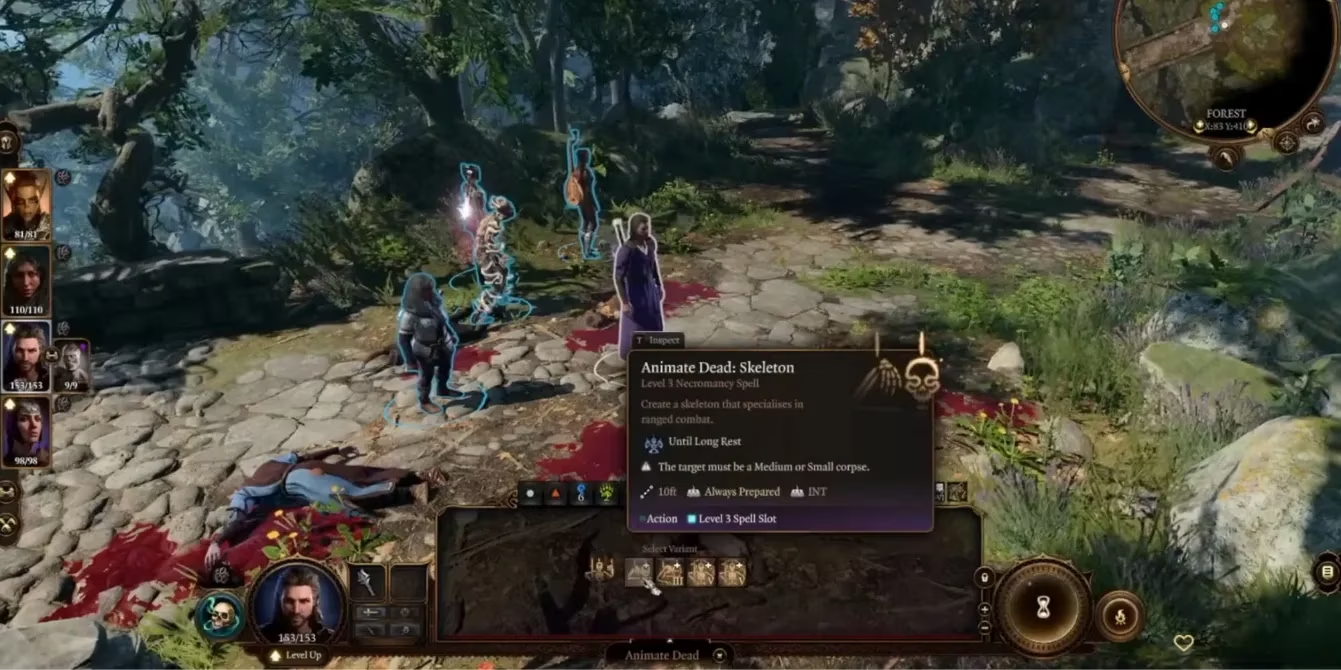
In practice, though, the dream runs into a very loud reality check. Players who have tried full summon armies report that most turns take an eternity. Every extra ally is another character to render, another initiative entry, another animation, and another pathfinding decision. Act 3 is already heavy on many computers, and adding dozens of summons only gives the machine more characters to track while the party travels to the next fight. Reddit user AtlasFlynn joked that 4 fps would be the average. The joke lands because it is not far from the truth for some setups. Once combat begins, lag between turns can turn a clever plan into an arduous task.
There is also the enemy side of the equation. A formidable opponent may have already raised allies of its own, and each additional unit stretches the turn order further. The result is less a power fantasy and more a patience test. The game has other creative, game-breaking options, too. Hoarding explosive barrels and piling them in front of a difficult enemy, often called barrelmancy, is a well-documented route. Like the summon army, it can overload a computer and force a game to crash before the plan succeeds.
So the summon army remains a spectacular science experiment. It works, technically. It just asks the player's patience and the computer's graphics card to pay the bill. For players who love action-economy chaos, that trade-off may be worth it. For everyone else, a smaller, faster party often feels like the smarter conquest. No small feat, either way.