I still remember my first blind run through Baldur's Gate 3. Every dialogue choice felt weighty, every combat encounter could spiral into chaos, and the sheer number of secrets tucked away in Faerûn made my head spin. By the time the credits rolled, I already knew I'd be back. This is a game built for replayability in a way few others manage. Its narrative branches twist so wildly that two players can describe completely different stories after a hundred hours each.
Of course, I'm not the only one who thinks this way. The community has mapped out at least five distinct replay archetypes, and those don't even account for specific character builds. You've got the first-timer's blind leap—no guides, no spoilers, just raw discovery. Then there's the redemption run, where you return to fix every mistake you made the first time around, saving companions you let die and forging alliances you once ignored. Next up is the Dark Urge path, both the pure evil version and the tortured redemption arc that follows if you resist the violent impulses. Finally, you can flip the entire perspective and play as one of the origin companions, seeing the story through Astarion's eyes or walking in Shadowheart's conflicted footsteps. Each of these feels like its own game, not just a replay.
But what truly supercharged the game's longevity was the arrival of mod support. When Larian unlocked the toolkit, the community exploded with creativity. Suddenly, I could adjust party size, tweak combat difficulty, or add entirely new subclasses that felt professionally designed. Cosmetic mods let me dress my party in gear that suited their personalities, and quality-of-life tweaks removed the minor friction points that had bothered me. Modding turned Baldur's Gate 3 into a canvas, and the numbers proved it. In 2024, two years after launch, more people were playing than in the game's debut year. That's almost unheard of for a single-player RPG. The graph lines shot up like a resurrection spell hitting a downed ally—📈 just unstoppable momentum.
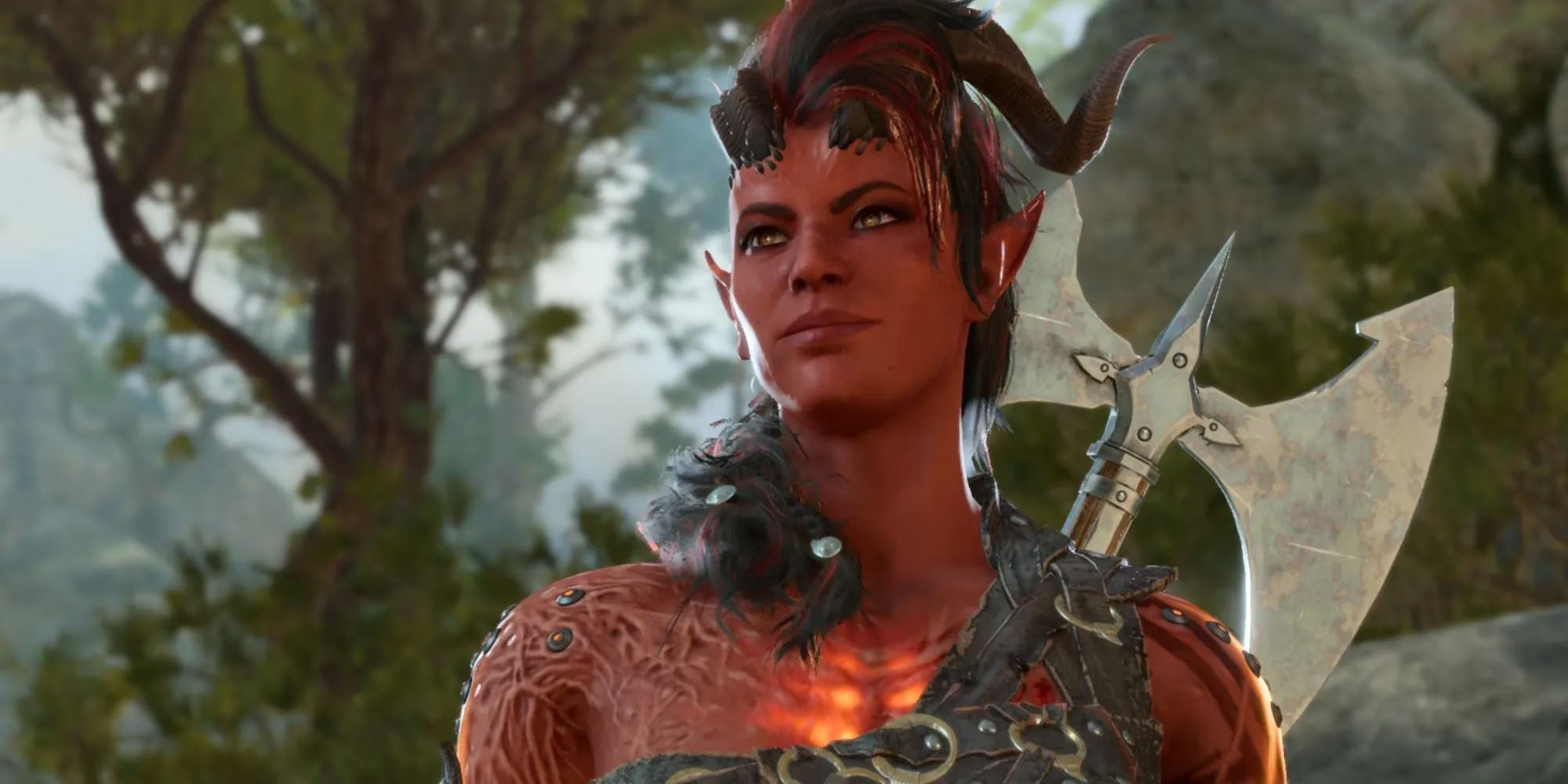
Then came the cryptic messages. Larian had publicly stated they were done with the game beyond maintenance patches, but their publishing director Michael Douse retweeted an article about that surging player count with the words "A pleasant surprise. And we're not quite done yet." The community immediately went into detective mode. Didn't they already add an epilogue party? Didn't mod support count as the final gift? What else could be in the pipeline? Speculation spread faster than a fireball in a tight corridor. Some dataminers had found traces of Alfira potentially becoming a temporary companion, and there were whispers about a Karlach-focused DLC that would take us into Avernus to fix her infernal engine heart. That last one became the holy grail of requests—🔥 practically every forum post and tweet begged Larian to give our fiery tiefling her proper ending.
Fast forward to 2026, and I have to admire the restraint. No massive story expansion ever dropped, but we didn't get nothing either. The updates that did come focused on polish and small, meaningful touches. A few extra camp conversations appeared. Some previously unreactive NPCs suddenly had things to say about your choices. It felt like the game kept breathing, even without a grand DLC announcement. The "what are they up to now" style montage never materialized, but the epilogue already provided enough closure for me. And honestly? The community filled the gaps. Modders created their own Avernus adventures, their own companion quests. Baldur's Gate 3 stopped being just a game Larian made—it became a platform for storytellers everywhere.
That's the thing about this game in 2026: it refuses to fade. I still fire it up every few months, test a new mod combination, or run through a single act with a ridiculous build. My latest run tried to romance everyone at once, which ended as chaotically as you'd expect—💔 so many broken hearts. The beauty is that even the failures make great stories. Larian might not be actively developing new narrative content, but the world they built is so alive that it doesn't need them to hold its hand anymore. There's a lesson here for the industry: when you treat your game as a living world instead of a product, players will keep it alive for years. So as I sit here in 2026, scrolling through yet another fresh batch of mods and community challenges, I can only smile. "Not quite done yet" turned out to be an understatement.