The gaming world is holding its breath for 2025, with GTA 6 poised to be the undisputed blockbuster of the year—barring any surprise delays or the mythical arrival of Half-Life 3. It's expected to set new benchmarks for what a next-generation video game can be. Yet, amid the hype, a different kind of conversation has sparked. Industry whispers suggest some analysts are quietly, almost hopefully, looking to GTA 6 to set a precedent for a $100 standard price tag. Let's just say, that's a spicy meatball for gamers' wallets.
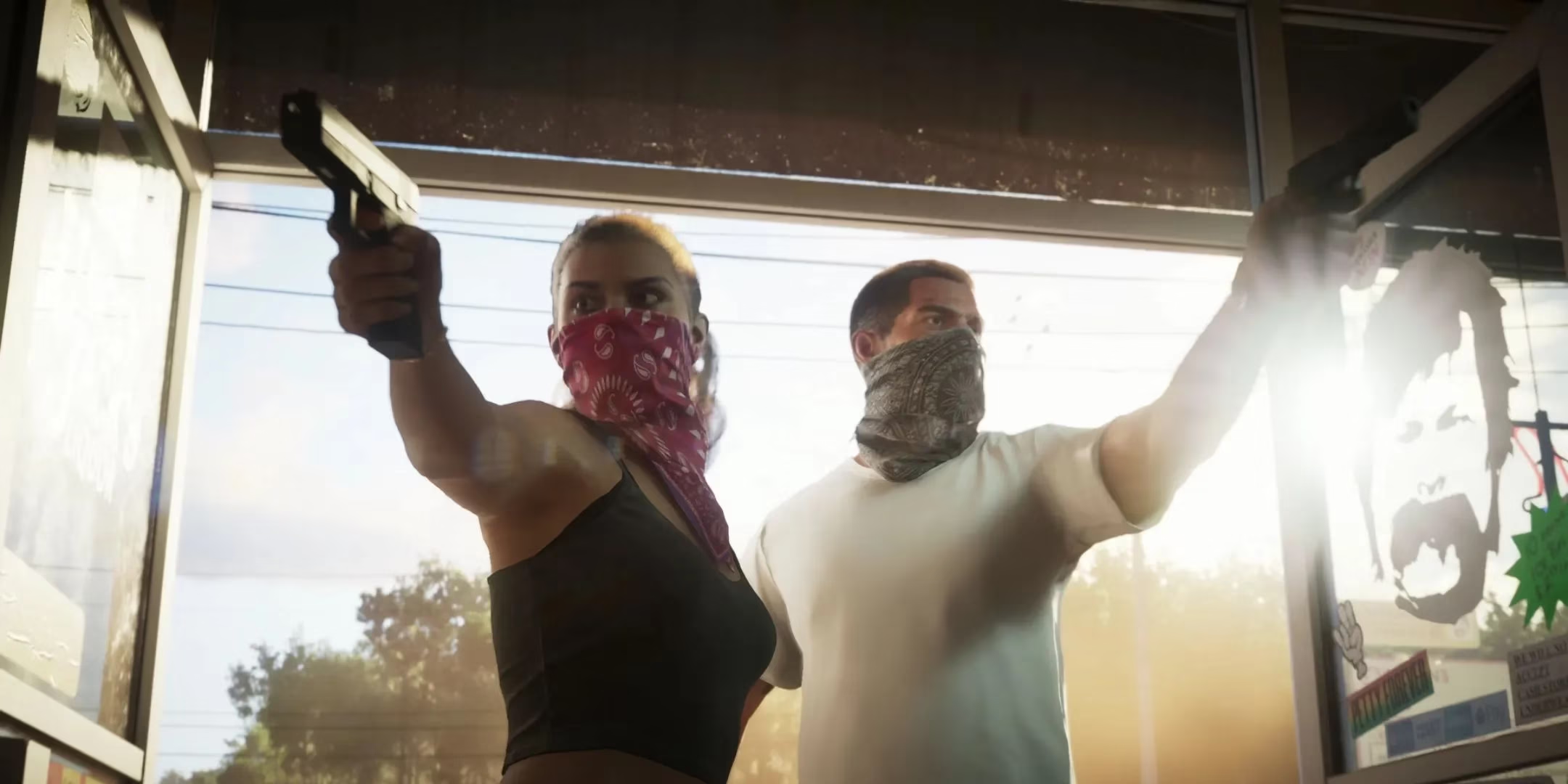
The $100 Question: Why GTA 6?
Right now, the standard for a big-budget, triple-A game sits at $70. It's a number we've gotten used to, but the costs behind making these digital worlds have ballooned. The argument goes that only a title with the sheer scale and cultural weight of GTA 6 could possibly shift the entire industry's pricing model. Think about it—who else could pull this off? Rockstar's next entry isn't just a game; it's an event. The prediction, while not confirmed by Rockstar or its parent company Take-Two Interactive, has sent ripples through the industry, forcing an uncomfortable look in the mirror.
An "Uncomfortable Truth" from the Inside
The chatter got so loud it caught the attention of Michael Douse, head of publishing at Larian Studios (the brilliant minds behind Baldur's Gate 3). He didn't just watch from the sidelines; he stepped right into the fray with what he called an "uncomfortable truth."
Retweeting a report on the potential $100 price, Douse wrote, "You’re not supposed to say this out loud!!!!" He laid it out plainly: "A good company raises salaries in line with inflation so that their staff don’t die or something, but games prices haven’t risen with inflation. This isn’t the reason the industry is in the shit for now, but it is an uncomfortable truth."
His point hits hard. The money it takes to build games has skyrocketed, yet the sticker price for consumers hasn't kept pace. It's a fundamental squeeze. But Douse didn't stop there. He added a crucial layer of responsibility: "On the other hand, the responsibility for a game developer is to make sure that the game they show lives up to that promise, and that investment from the player." Translation: If you charge more, you absolutely must deliver more. No ifs, ands, or buts.
The Other Side of the Coin: Where Does the Money Really Go?
Here's the kicker, and it's a bitter pill to swallow. Just because a publisher slaps a $100 price tag on a box doesn't mean the developers crunching the code see a dime of that in their paychecks. Let's be real. The video game industry in 2026 is a paradox: record-breaking profits on one hand, and relentless layoffs on the other. Studios are downsizing or closing their doors almost daily, even as franchises rake in billions.
-
The Profit Puzzle: Take-Two and Rockstar are already sitting on a mountain of gold from GTA Online's ongoing success. You can bet your bottom dollar they have plans to evolve that model for GTA 6.
-
The Human Cost: A higher price point could theoretically support better wages and more stable jobs... but history suggests it often doesn't work that way. The money tends to flow upwards, not out to the teams doing the creative heavy lifting.
Could GTA 6 Actually Get Away With It?
Let's play devil's advocate. If any game could normalize a $100 price, it's GTA 6. The demand is practically gravitational. People will buy it. Full stop. It has that rare, "take my money" quality. For Rockstar, it's less about if they could and more about should they. They hold immense power to shape industry standards. The question is whether they use that power to simply make more money, or to potentially advocate for a more sustainable model that values its workforce. The silence from their camp is... telling.
So, what are we left with? A looming release, a controversial price prediction, and an industry forced to confront its own economics. GTA 6 will be massive, but its legacy might be about more than just stolen cars and sun-drenched beaches. It could be the game that finally made us talk about what games are really worth—and who pays the price for making them. The ball, as they say, is in Rockstar's court. We'll be watching.