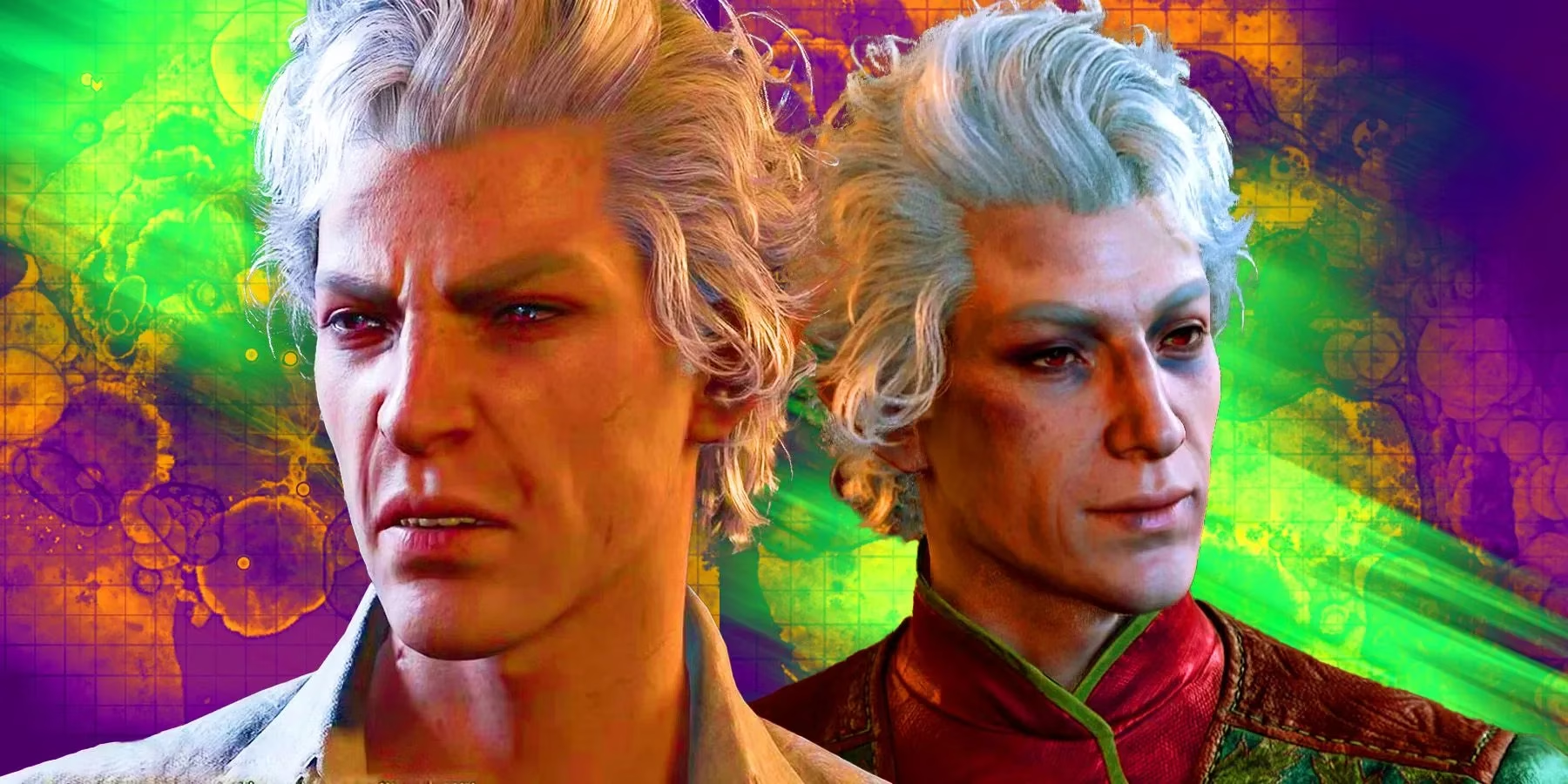
I’ll admit, back in 2023 when Baldur's Gate 3 first dropped, I was so busy swooning over Astarion’s razor-sharp jawline and theatrical one-liners that I almost missed something seriously twisted about him. I’m talking about his borderline-racist beef with gnomes. At first, I thought it was just his usual camp, the vampire spawn version of a cat hissing at a cucumber — you know, over-the-top but harmless. But as I racked up hundreds of hours across multiple playthroughs (and yes, even in 2026 I’m still discovering new things in this masterpiece), I realized that sassy attitude was hiding a much deeper character flaw. The good news? By the time the credits rolled on my first Spawn Astarion ending, I was literally tearing up seeing how far he’d come.
Here’s the thing: Astarion’s gnome hatred is never fully explained in the game, which made it feel like a genuine, ugly prejudice he’d picked up over two centuries of being Cazador’s puppet. I remember my first trek through the Grymforge in Act 1. We were trying to figure out how to free True Soul Nere, and I was like, “Alright, let’s blow up that cave-in and save everyone.” Out of nowhere, Astarion piped up, saying he understood saving a drow but didn’t want to dig through rock just to save some gnomes. Excuse me? I literally paused the game. Gnomes hadn’t done a single thing to us — in fact, the poor deep gnomes were slaves. But my pale elven companion just shrugged them off like they were yesterday’s garbage. That’s when I started paying attention. In Acts 1 and 2, he drops several snide remarks about gnomes that I’d previously ignored because, well, I was too busy laughing at his “darling” this and “darling” that. He mocks their size, questions their competence, and generally acts like they’re beneath him. It’s almost as if he needs someone to look down on — and as a spawn, he’s pretty much at the bottom of the undead food chain himself.

Now, compare that with some of his other dislikes. He has a legitimate beef with the Gur, the monster-hunting nomads. That at least makes sense: a vampire avoiding people who stake creatures like him is a no-brainer. Goblins? They’re enemy-ville in Act 1, so I’d probably roll my eyes at them too. But gnomes? Astarion’s animosity toward them feels raw and personal — like he just wants to hate someone he perceives as weaker. It’s standard bully-logic, and it honestly made me question whether I wanted him in my party during my first goody-two-shoes run. But by Act 3, I started seeing cracks in that centuries-old armor.
The turning point came when my Tav finally convinced him not to ascend. If you’ve never seen the Ascendant Astarion path, it’s chilling. He essentially doubles down on his cruelty and becomes Cazador 2.0. But Spawn Astarion? That’s the route where he actually grows a conscience. Killing Cazador without taking over the ritual was a seismic shift for him. For the first time in his undead life, power wasn’t the goal — it was freedom, and not just for himself. The moment that really hit me was six months later at Withers’ epilogue party. (That party, by the way, remains one of the most satisfying wrap-ups I’ve ever seen in a CRPG. Larian absolutely nailed it.) Astarion had turned into a leader for Cazador’s victims, guiding the other spawn through the Underdark without becoming a master over them. He was no longer the selfish, fanged diva from Act 1. And then he said something that made me choke on my tea: he mentioned hoping the spawn he’d been looking after hadn’t killed another gnome. I actually replayed his line twice.
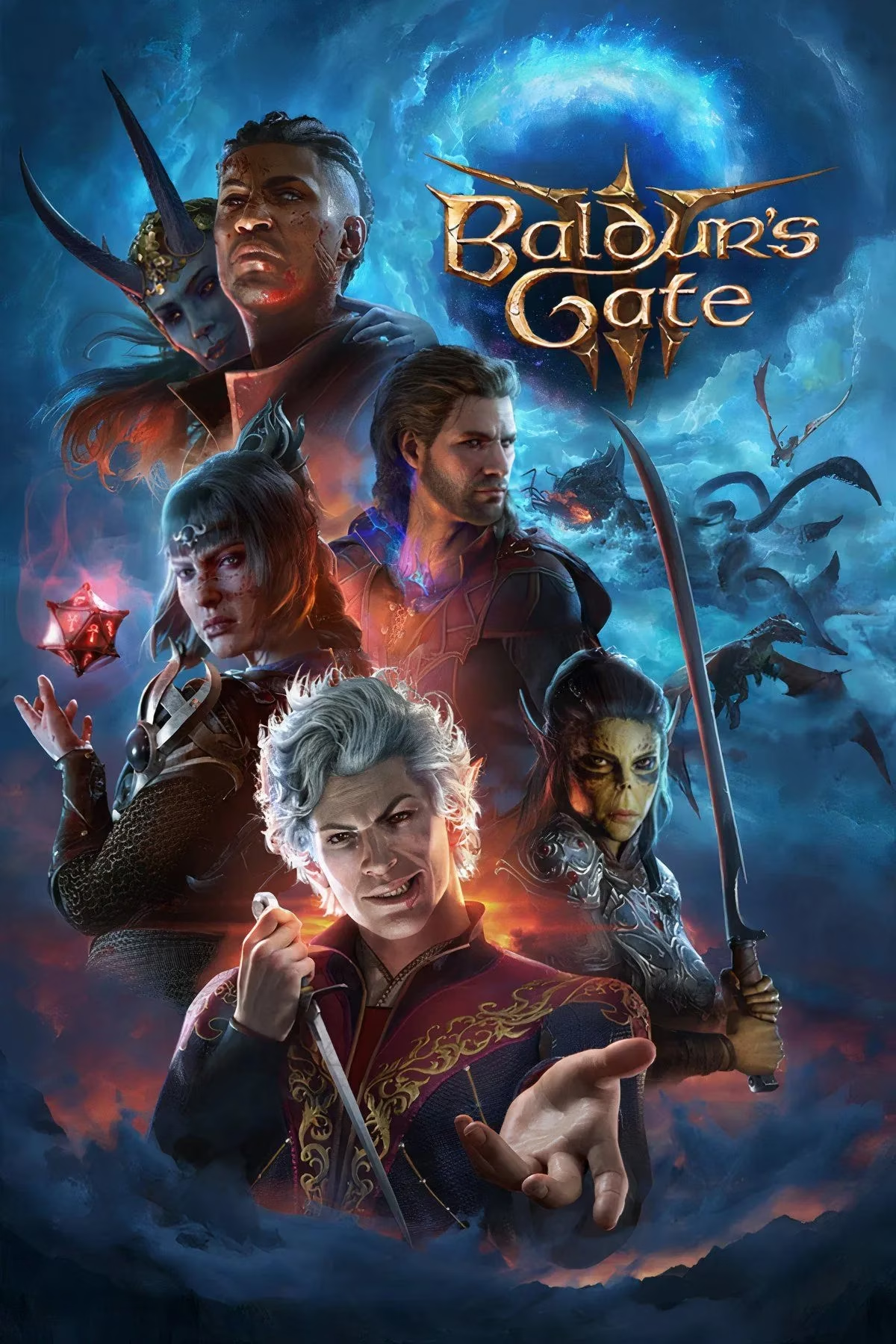
Let’s really soak that in. The guy who used to joke about leaving gnomes to die now genuinely cared about whether one might have been murdered by his own people. That’s not just a tweak in personality — it’s a full-blown redemption arc for his prejudice. The old Astarion probably would have cackled and said, “Just make sure they’re not in my way, darling.” This one? He was worried. It dawned on me that during those months of reflection, he’d finally gotten over his gnome problem. Maybe he realized that Yousen, one of his “siblings” in Cazador’s mansion, was a gnome, and being in charge meant he couldn’t keep that nasty attitude without wrecking their fragile new community. Or maybe he just grew up. Astarion started as a man who followed orders, first from Cazador, then from my Tav. By the epilogue, he was a man who could lead with empathy, and a big part of empathy is letting go of pointless hatred.
I’ve been a professional game critic for over a decade, and let me tell you: small details like this are why Baldur’s Gate 3 will still be relevant in 2026 and beyond. Most RPGs use side comments as flavor text. Here, they’re the vertebrae of a character’s spine. Astarion’s gnome discrimination isn’t just a weird quirk; it’s a symptom of his pain and powerlessness. By overcoming it, he proves he’s no longer the monster Cazador tried to make him. So, next time you roll a Tav and romance this disaster of a vampire, keep an ear out for those little gnome jabs in Act 1. Then, do everything you can to steer him toward the spawn ending. When you hear that epilogue line, you’ll feel like a proud parent watching your kid finally stop being a jerk in the schoolyard. Astarion might still be a creature of the night, but he’s one who’s learned that a person’s size has squat to do with their worth. And in a world filled with mind flayers, gods, and literal devils, that’s a heck of a character payoff.