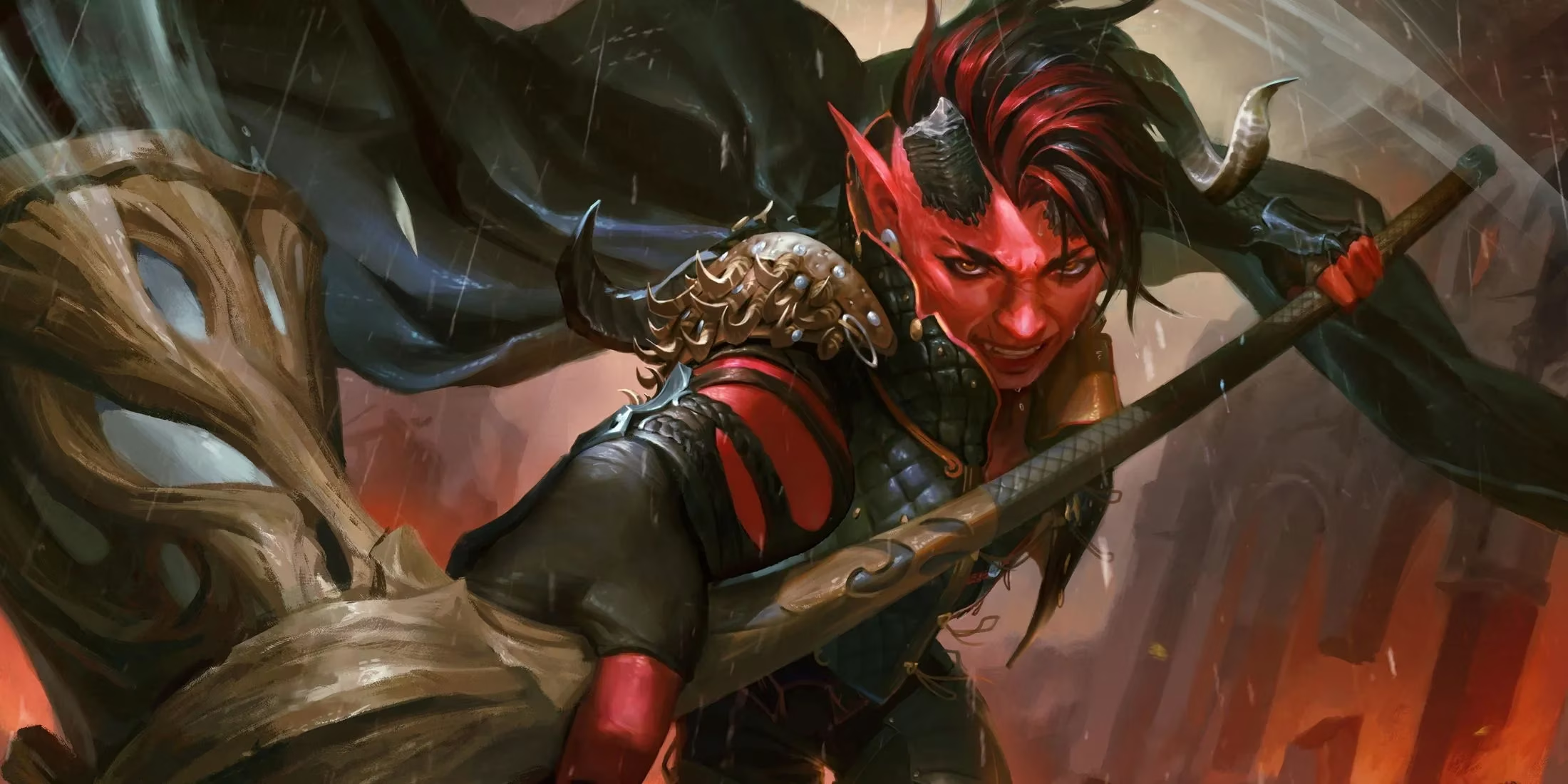
I still remember the first time my Karlach picked up a goblin and hurled him into another goblin. It was absurd, efficient, and exactly the kind of chaotic freedom that made Baldur's Gate 3 stick in my brain. In 2026, with the 2024 Player's Handbook fully settled into my local tables, I finally decided to see whether that thrown-weapon fantasy could survive outside Larian's ruleset. My answer: yes, if you build for it with intent, a little multiclassing, and a generous but fair reading of improvised weapons.
The Goblin-Tossing Spark
Baldur's Gate 3 made thrown weapons feel like a real playstyle rather than a joke. The game's open-ended rules let me throw axes, spears, barrels, and occasionally party members. When I moved that idea to tabletop, I expected the fun to collapse under bookkeeping. Instead, the 2024 rules gave me more handles to grab than I expected. The updated Player's Handbook does not turn every martial character into a carnival strongman, but it does make Strength-based throwing much more coherent.
The key for me was the Thrown Weapon Fighting style. As my table reads it, the style rewards throwing weapons with the Light property and pairs naturally with Extra Attack. That consistency matters because thrown weapons often feel like a tax: you lose a weapon, you juggle draw and stow rules, and your damage can lag behind a bow. With the right fighting style and a stacked build, the tax becomes manageable. I stopped thinking of throwing as a backup and started treating it as my character's primary language.
Why 2026 Tables Feel Different
The 2024 update introduced a new system that benefits alternative builds, and Weapon Mastery is the piece I keep coming back to. In my current campaign, I run a Fighter first for the clean early game, then dip into Barbarian for Rage and high Strength. The result is a ranged martial character who does not feel like a reskinned archer. I am not just rolling damage; I am moving enemies, opening lanes, and sometimes making my DM sigh at the furniture I have added to my inventory.
| Build Piece | What I Use | Why It Matters |
|---|---|---|
| Fighter | Thrown Weapon Fighting, Extra Attack | Reliable damage and more throws per turn |
| Barbarian | Rage, high Strength | Strong thrown attacks and durability |
| Rogue dip | Sneak Attack, Cunning Action | Stealth and range without losing identity |
| Weapon Mastery | Push, Nick | Battlefield control and action compression |
| Tavern Brawler | Improvised weapon synergy | Higher damage if the table allows it |
The most effective way I found to replicate Baldur's Gate 3's diverse thrown builds is multiclassing for stacked features. Fighter and Barbarian give me a sturdy base, while Weapon Mastery turns each throw into a small tactical decision. When I add Rogue levels, the character becomes a blend of stealth and range: I throw from cover, reposition with Cunning Action, and let Sneak Attack punish distracted enemies. A simple dagger at early to mid-level can start at 1d4 damage and climb to around 11 points on average once all the bonuses stack. When I upgrade to Light weapons with better damage dice and pair them with Extra Attack, the output per turn becomes genuinely respectable for a ranged martial character.
Weapon Mastery Is the New Playground
Weapon Mastery is where the 2024 rules feel most alive to me. The Push property lets me space enemies after a thrown attack, creating room for allies or setting up a retreat. Nick is the quieter winner: consolidating dual-wielding attacks into one Action makes my turn feel less cluttered. I have used both to turn a thrown handaxe into a control tool rather than a pure damage roll. In one session, I threw a handaxe with Push, knocked a cultist away from our cleric, then stepped into the gap with my second attack. That moment would have been impossible in my older builds.
The 2024 update does not hand this to every character for free. It asks the player to commit: choose the right class features, plan the weapon loadout, and accept that thrown weapons demand a little inventory discipline. I now carry a pouch of daggers, two handaxes, and a shortspear. My DM has learned to ask whether I am drawing, throwing, or recovering. That small rhythm makes the build feel physical rather than abstract.
Tavern Brawler and the Improvised Question
Tavern Brawler is the wild card. The updated feat matches Baldur's Gate 3's implementation more closely, and it benefits unarmed strikes in a way that can affect thrown weapon attacks if the table rules that a thrown object counts as an improvised weapon. This is not a universal guarantee. It is a conversation to have before Session Zero. When my table allowed it, my Strength-based thrower gained a noticeable damage bump. When another table ruled against it, the build still worked because Thrown Weapon Fighting and Weapon Mastery carried the core.
If allowed, Tavern Brawler can offer a considerable increase in damage output for Strength-based throwing characters. Depending on interpretation, subclasses such as the Path of the Giant from 2023's Bigby Presents: Glory of the Giants can even throw massive objects for significant damage in the right context. In Baldur's Gate 3, the limit comes from how many improvised weapons I can find and carry. In the more open format of tabletop after the 2024 update, the limit is mostly DM approval and encounter design.
What I Learned at the Table
My 2026 thrown-weapon build is not a one-trick pony. It is a ranged martial with options: I can deal consistent damage, move enemies with Push, compress my action economy with Nick, and lean into stealth when the situation calls for it. The build does require buy-in from the table, especially around improvised weapons and recovery rules. But when it clicks, it feels like the same joyful chaos I loved in Baldur's Gate 3.
I still keep a mental list of throwable furniture in every dungeon. I still smile when the DM asks how many daggers I brought. And I still believe the humble thrown weapon deserves more respect than it gets. With the 2024 rules, a 2026 table can make that happen. 🎲🪓