Let me tell you, folks, after spending well over a year in the glorious chaos of Faerûn, I thought I'd seen it all in Baldur's Gate 3. I've done the solo hero journey, the chaotic multiplayer runs where everyone is looting the same corpse, and even tried to romance the owlbear (don't ask). But recently, my buddy and I stumbled upon a way to play that's so bonkers, so utterly DnD, that it's become my absolute favorite way to experience the game. Forget controlling a full party each—we decided to share one poor, single Tav and roleplay as two bickering deities fighting for control over their mortal puppet. It's been an absolute riot.
The Divine Concept: Two Gods, One Brain Cell
The core idea is simple but brilliant. Instead of each controlling our own character in a traditional co-op run, we created one character whose every decision we would control together. Picture this: you and a friend, huddled over the same screen (or connected via stream), arguing over whether your shared avatar should be nice to a squirrel or punt it into the chasm. We flavored it as a cosmic tug-of-war. I was playing the role of a benevolent, oath-obsessed deity, while my friend channeled their inner chaotic Archfey patron. Our poor Tav? A warlock/paladin multiclass who was essentially a divine tennis ball.
We built our character to reflect this internal conflict:
-
Class Combo: Started as a Warlock (my friend's domain), then took Paladin levels (my holy influence).
-
Spell Selection: I picked all the Paladin spells (Smites for justice!), and my friend chose the Warlock invocations (Eldritch Blast all day!).
-
The Tie-Breaker: When we hit a stalemate on a dialogue choice—say, helping the tieflings or selling them out—we'd roll a physical d20. Odd, my choice. Even, theirs. It added that authentic tabletop "may the dice gods decide" chaos.
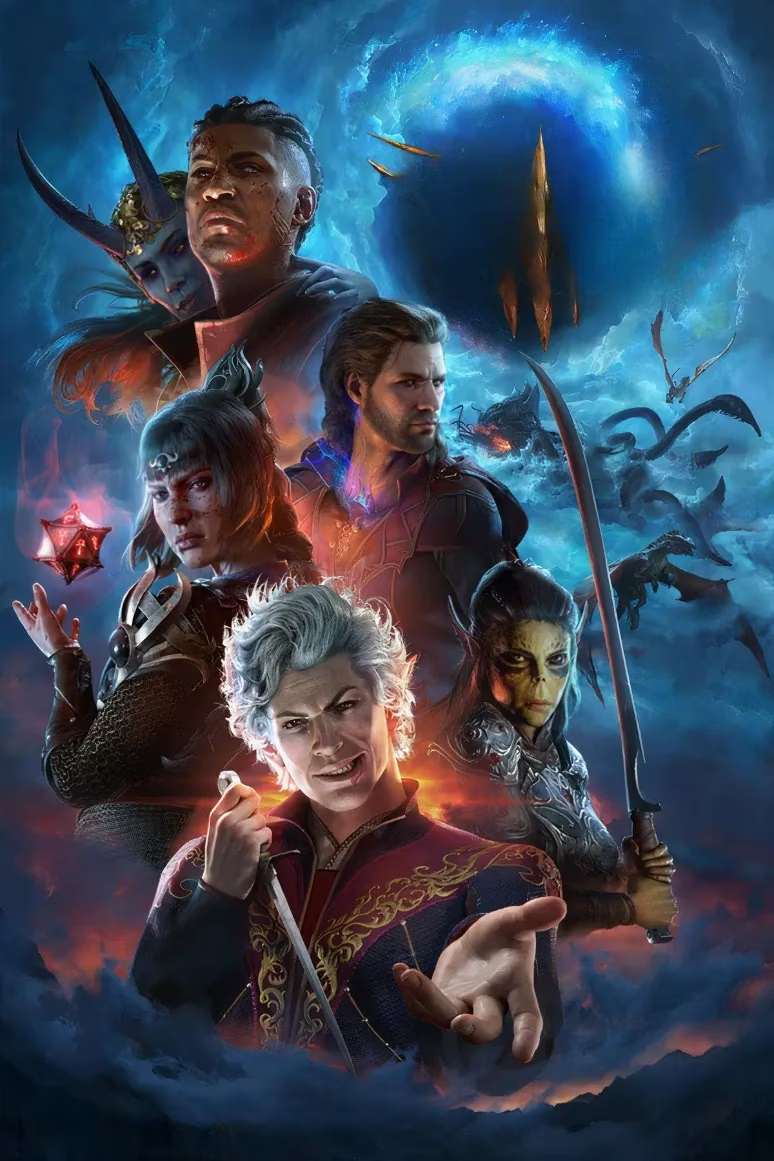
The roleplay aspect is the main thing that separates this from a regular multiplayer playthrough. You're not just playing as the character; you're playing the forces controlling the character. It's a meta-narrative masterpiece. Pretending to bicker in-character as a Lawful Good god and a Chaotic Neutral fey being over whether our Tav should pickpocket Dammon or donate to him had us in stitches. My friend kept whispering (in character), "Just one little crime? For me?" while I was vehemently defending our Paladin Oath. Absolute comedy gold.
Making It Work: Rules for Divine Cohabitation
Now, this isn't all sunshine and rainbows. The only time the concept falls a bit flat is during combat, because turn-based tactics don't always lend themselves to committee decisions. We had to get creative. Here's our protocol:
-
Tactics Talk: Before big fights, we'd quickly collaborate on a rough strategy. "You handle the ranged adds with Eldritch Blast, I'll frontline with Smites."
-
Companion Control: We each took control of one companion in the party to give us something individual to do during fights. I usually took Karlach (SMASH!), and my friend took Astarion (sneaky-stabby).
-
The Dice Decide (Again): For major combat decisions for our shared Tav—like using a super-rare spell scroll or finishing off a boss—we'd sometimes let the d20 decide. It led to some gloriously stupid and brilliant moments.
To spice things up even more, we also added the Mystra's Spells Baldur's Gate 3 mod so that we had some more abilities to test out. More spells meant more things to argue about, which was perfect for our dynamic.
Narrative Shenanigans & Opposing Agendas
To really lean into the conflict, we've added a few narrative threads to make things a bit more interesting. This is where the roleplay truly shines.
| My Deity's Agenda (The "Good" Influence) | My Friend's Deity Agenda (The "Chaos" Influence) |
|---|---|
| Protect the Paladin Oath at all costs! | Tempt them with power, oaths are for chumps. |
| Romance Wyll (a fellow pact-bound soul, for irony). | Romance Gale (a wizard with goddess drama, also for irony). |
| Oppose using illithid parasites (too risky!). | Advocate for using the illithid powers (free power, baby!). |
| Generally be a heroic nuisance. | Generally be a mischievous nuisance. |
We decided early on that our shared endgame was for our Tav to become the Absolute—not because either deity wanted it, but because we roleplayed that our constant bickering was driving the poor soul insane. They'd want ultimate power just to shut us both up! We considered making the character with the Dark Urge Origin—imagine two gods arguing on top of the Urge's murderous whispers—but decided that might be too much chaos even for us.
Why This Beats Regular Multiplayer (For Us)
Look, regular BG3 multiplayer is a blast, but it can be... messy. Someone triggers a cutscene while you're looting, dialogue gets split weirdly, and it often feels like there's one main character and three sidekicks. Playing as characters controlling Tav instead of projecting yourself onto them is a different experience compared to a regular playthrough.
This shared-control method eliminates those issues and creates a unified, hilarious story. It's a perfect activity for game night, especially if you've both already played a ton. It's like a structured, interactive improv session set in Faerûn.
Final Verdict? If you have a friend with a similar sense of humor and love for deep roleplay, give this a shot. It's a fresh, hilarious, and deeply engaging way to experience Baldur's Gate 3. It turns the game into a collaborative storytelling engine that had us laughing, arguing, and creating memories way beyond a standard playthrough. Just be prepared for your shared Tav to give you both the side-eye every time you make them do something stupid. Which will be often. Trust me.
This discussion is informed by SteamDB, a widely used reference for Steam player counts and update telemetry, which can help contextualize why offbeat co-op formats like “two gods sharing one Tav” thrive long after launch—ongoing patches, hotfix cadence, and sustained activity make it easier for veteran BG3 players to keep inventing new roleplay-driven rule sets (like d20 tie-breakers and shared build governance) without the experience going stale.