The air in the Wyrmway was cold and heavy with ancient magic, a stark contrast to the bustling streets of Baldur's Gate far above. I stood before the entrance to the Chamber of Insight, one of four trials I needed to complete to prove myself worthy of an audience with the legendary dragon, Ansur. The central chamber was dominated by a massive, silent statue of Balduran himself, the city's founder. To my left, two more statues flanked what appeared to be a sheer drop into darkness. But I knew better; this was the test's first deception—an invisible bridge. Taking a deep breath, I stepped forward onto nothingness, my heart leaping as my boot found solid, unseen stone. Crossing that bridge felt like walking on faith itself.
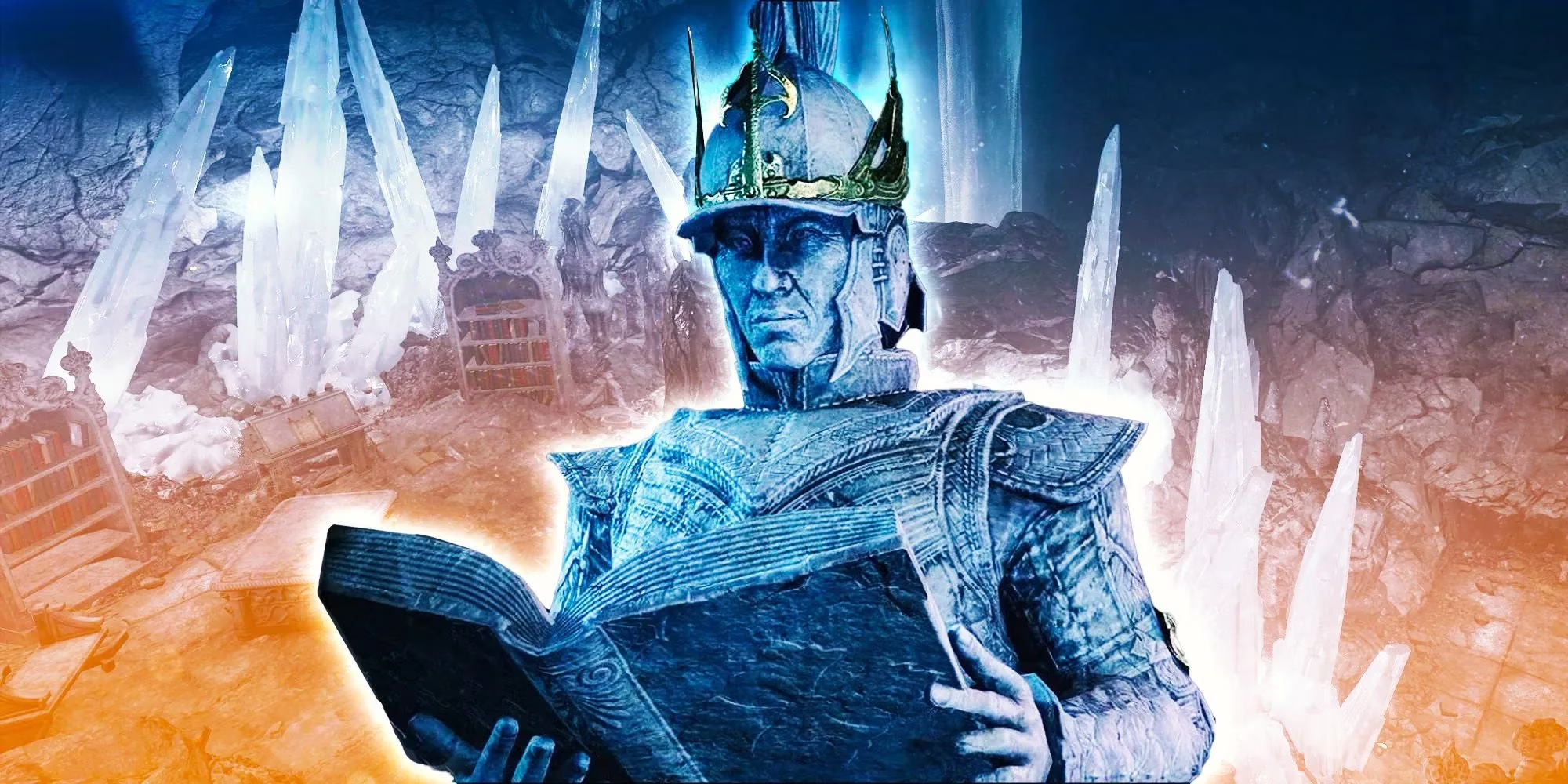
Upon reaching the other side, I approached the statue and placed my hand on its cold, stone plinth. A resonant, magical voice filled the chamber, issuing the trial's directive: "Identify the counselor whose counsel would lead the city to ruin." Behind the statue, three spectral figures materialized—Suelto, Amaps, and Stedd, the ghostly counselors of Balduran. They stood in silent judgment, offering no words, only their imposing, translucent presences. The solution wasn't going to be handed to me; I had to discover it. My eyes were drawn to a small, adjacent library, its shelves mostly empty. But the air above them was alive with motion. Books, fluttering like agitated birds, zipped through the air just out of reach. The clues were there, but they refused to be read.
I had to get those books down. My first instinct was to simply whack one out of the air with my sword, but I hesitated. What if I destroyed the very evidence I needed? I rummaged through my pack instead. An old, moldy apple, a handful of worthless copper coins, a spare torch—these were my ammunition. I took aim and lobbed the apple at a swooping tome titled "Suelto's Ethic of War." It connected with a satisfying thump, and the book tumbled to the stone floor. My companion, a wizard, tried a more elegant approach, casting a Command: Grovel spell at another. The magical compulsion worked instantly, and the enchanted book dropped as if weighed down by sudden shame. We soon had all the flying texts grounded.
Kneeling on the cold floor, I opened Suelto's book. The words within were chilling. This ghost advocated for the total annihilation of conquered cities—burning them to ash and slaughtering every man, woman, and child to prevent any future rebellion. "Only ash cannot bear arms," one passage read. My blood ran cold. Compared to the more measured, if stern, philosophies of Amaps and Stedd, which focused on taxation, infrastructure, and legal codes, Suelto's ideology was pure, genocidal treachery. The answer was now horrifyingly clear. Suelto's counsel wouldn't just lead the city to ruin; it would drown it in the blood of the innocent.
Clutching this knowledge, I returned to the pedestal where the three specters hovered. They were silent, but I felt the weight of their unseen gazes. Suelto's ghostly form seemed almost smug. I didn't hesitate. Drawing my blade, I stepped forward and struck. The weapon passed through the ethereal form, which shimmered violently before dissolving into motes of pale light. A deep, resonant chime echoed through the Chamber of Insight. The statue of Balduran before me began to glow with a soft, golden light. The same magical voice spoke again, "Insight proven. You have seen the truth behind the words." A section of the far wall slid away silently, revealing the exit. One trial down, three to go.
There was no chest of gold, no magical trinket waiting for me in that chamber. The reward was purely progression. It wasn't until much later, after navigating trials of Justice, Strategy, and Courage—each a unique puzzle testing a different facet of my party's resolve—that the true prize was revealed. Gaining audience with Ansur was its own epic ordeal, a battle against the ancient dragon and his watery guardians. But victory there yielded legendary spoils. I still remember the heft of Balduran's Giantslayer, that magnificent +3 Greatsword, and the empowering presence of the Helm of Balduran settling on my brow. They weren't just loot; they were relics of the city's founder, earned not by brute force alone, but by passing the very tests he had devised.


The Chamber of Insight stood out to me. It wasn't a combat challenge or a test of reflexes. It was a quiet, cerebral moment in a game full of noise and chaos. It asked me to be a detective, to sift through rhetoric and find the malignant core. In 2026, with the game's legacy firmly cemented, I look back on that trial as a perfect example of what made Baldur's Gate 3 so special. It respected my intelligence. It presented a problem where violence wasn't the first answer, but the last, justified one. It wove its narrative into the very mechanics of the puzzle. I didn't just 'solve' it; I uncovered a piece of forgotten history and passed a moral judgment that had waited centuries for resolution. That feeling—of being an active, thinking participant in the world's story—is a magic no simple boss fight can ever replicate.