The screen flickered, casting long shadows across the cluttered desk. In the realm of isometric RPGs, where every decision sculpted worlds, not all heroes wore shining armor. Some gazed into the abyss and smiled. For years, a quiet community of gamers had sought something beyond virtue—a chance to walk the path of the betrayer, the tyrant, the corruptor. They found it in a handful of masterpieces that dared to ask, “What if you were the villain?” And so, in 2026, the legacy of these dark journeys still burned bright, offering experiences as twisted as they were unforgettable.
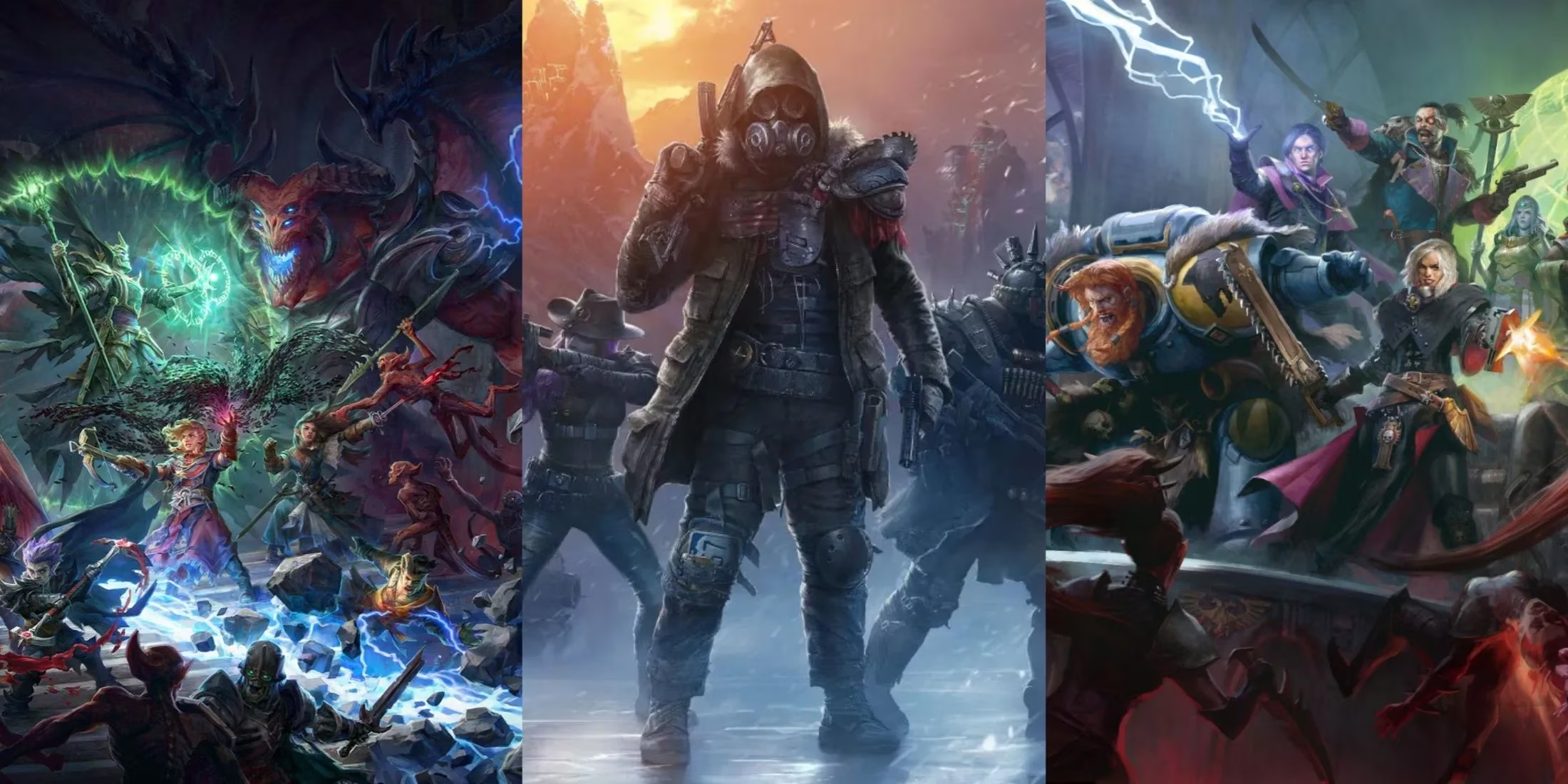
A gamer sat before the monitor, eager to trace the shadowed roads. His first stop was Shadowrun: Hong Kong, where rain-slicked alleys whispered of betrayal. Here, the path of evil was paved with lethal choices and venomous words. He could intimidate, deceive, and ultimately sacrifice his own team for personal gain. In one run, he allied with criminal syndicates, abandoned allies, and sealed a demonic pact, watching the city’s fragile balance shatter—a testament to how even a single operator could tip the scales into darkness.
But deeper horrors awaited. The grimdark future of Warhammer 40,000: Rogue Trader called, and he answered. As a sanctioned explorer, he commanded unthinkable power. Planets crumbled under his decree, daemonic pacts were forged, and loyal companions twisted into tools of ambition. There were no heroes here—only degrees of oppression. The gamer marveled as he strode through the Void, leaving a trail of corruption that would make even the Inquisition shudder. It was a perfect marriage of setting and morality, where evil wasn’t an afterthought—it was the air he breathed.
The journey then veered into the frozen wastes of Wasteland 3. Here, salvation and damnation wore the same frostbitten face. The player learned that sometimes the simplest evil was the most satisfying: burning down a building to settle a noise complaint, or siding with the maniacal Liberty Buchanan to watch Colorado burn. Assassinating the Patriarch plunged the region into chaos, ending the game on a ghastly note. The Colorado wasteland didn’t care about morals—it rewarded the ruthless.
From post-apocalyptic snow to the iron fist of empire, Tyranny awaited. The gamer assumed the role of a high-ranking officer in Kyros’s evil regime, and from the first command, cruelty was the only language. Executions, forced conscriptions, and betrayals became daily routine. He manipulated factions like puppets, executed dissenters, and bathed the land in terror. Tyranny didn’t just offer an evil route—it demanded one, weaving a narrative where the conquest of good was almost inevitable, and the player was the instrument.
Nostalgia drew him back to the classics. Fallout 2 stood as a monument to amoral freedom. Amid the radioactive dust, the gamer discovered that he could poison entire towns, sell his companions into slavery, and become a slaver king. The Wasteland was a canvas of desperation, and he painted it with the darkest hues. Every interaction, every quest, hid a vile alternative, making the post-nuclear world a playground for the wicked.
Then came Age of Decadence, a brutal, Roman-inspired isometric RPG where betrayal was currency. Lies, assassinations, and backroom deals fueled the narrative. The player quickly learned that survival meant embracing treachery—poisoning a noble, tearing alliances apart, and leaving cities in flames. The game’s unforgiving difficulty only honed the jagged edges of its moral vacuum, and the gamer’s journey became a symphony of deceit.
Sailing the Deadfire Archipelago in Pillars of Eternity 2: Deadfire, the evildoer’s heart beat louder. As a ruthless pirate captain, he pillaged innocents, shattered alliances, and aligned with oppressive factions. Companions recoiled or were corrupted; nations crumbled. The sea had no mercy, and neither did the captain who carved a bloody legend into its history.
In the bizarre planes of Planescape: Torment, the gamer found that evil was as philosophical as it was visceral. Controlling the immortal Nameless One, he manipulated souls, betrayed ancient allies, and embraced the chaos of the multiverse. The narrative wove deep questions about identity and corruption, but the player chose the darkest answers, twisting the cosmos itself.
Then, recalling the recent years, Baldur’s Gate 3 surfaced. Its Patch 7, released back in 2024, delivered new diabolical endings that still resonated in 2026’s gaming circles. The gamer remembered how he had betrayed the druid grove to goblins, delivered tiefling refugees to slaughter, and sacrificed thousands to elevate Astarion’s vampiric ascension. Shadowheart fell utterly to Shar’s darkness. The game’s narrative branches were so rich that even the loss of companions felt like a small price for absolute power.
Finally, the gamer reached the pinnacle of evil role-playing: Pathfinder: Wrath of the Righteous. Here, the Mythic Paths offered ascension into true monstrosity. He walked the Lich’s road, raising undead legions; became a Demon, tearing through the crusade; even transformed into the Swarm-That-Walks, a consuming horror. Each path rewrote the crusade’s destiny, and no other game had so thoroughly crafted an evil experience built into its very core mechanisms. The gamer sat back, awed by the depth of darkness he had traversed.
Thus, the journey through isometric RPGs became a map of moral decay, each title a landmark in the exploration of evil’s many faces. From the cyberpunk betrayals of Shadowrun to the ultimate corruption of a Mythic Lich, these games proved that the darkest paths often tell the brightest stories—if only for the flicker of diabolical delight they ignite in the player’s soul.