Shadowheart, the guarded half-elf cleric of Shar, remains one of Baldur’s Gate 3’s most hauntingly complex companions even three years after the game first launched. As adventurers still stream into Faerûn in 2026, her storyline continues to spark debate, emotional reflection, and countless forum threads. From the very first encounter on the ravaged beach, this mysterious devotee of the goddess of darkness and loss presents a riddle wrapped in a silver circlet. Her memories are fragmented, her trust is hard-won, and every single player choice can push her toward liberation, damnation, or a bittersweet compromise.
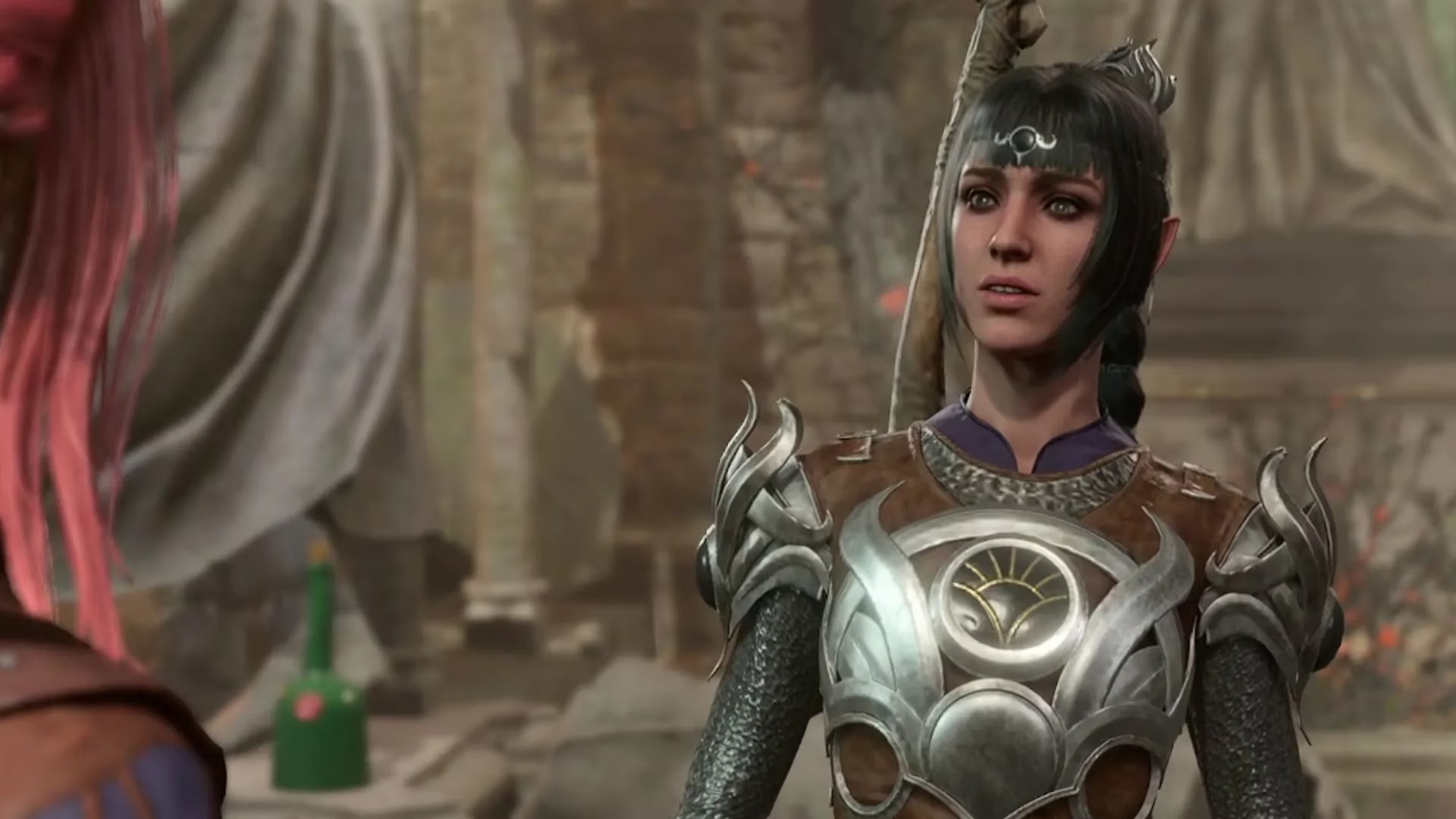
Larian Studios’ masterpiece thrives on the weight of consequence, and nowhere is that more apparent than in the three distinct endings available for Shadowheart. Each conclusion flows organically from a single, pivotal moment: the fate of the Nightsong, an immortal being held captive in the Shadowfell. Whether the cleric plunges her spear into the heart of this celestial prisoner or stays her hand triggers a cascade of repercussions that ripple through the rest of her personal quest. The final outcome will see Shadowheart either ascending to the highest ranks of Shar’s church, roaming the realms as a free-spirited adventurer, or settling into a quiet domestic life that was stolen from her decades ago.
Shar’s Champion: The Dark Justiciar Becomes Mother Superior
The darkest path emerges when Shadowheart fully embraces Shar and murders the Nightsong. By committing this act of absolute loyalty, she proves herself worthy of becoming a Dark Justiciar, the legendary enforcers of Shar’s will. From that brutal sacrifice onward, her entire demeanor shifts — her hair bleeds to stark white, her eyes grow colder, and any softness she once showed evaporates. The transformation isn't merely cosmetic; it marks the permanent suppression of the fragments of her old, erased life.
At the story’s conclusion, Shar rewards this unwavering fealty with the position of Mother Superior, previously held by the formidable Viconia DeVir. Shadowheart now rules from the House of Grief, the shadowy enclave that once held her captive. Under her command, the Sharran influence swells across Baldur’s Gate and beyond, spreading secrets, loss, and despair. The epilogue shows a figure utterly consumed by duty — alone, powerful, and forever severed from the childhood she never truly had. It is a victory for Shar, but for those who had hoped to see the real Shadowheart emerge, it is the bleakest possible outcome.
The Rebel Cleric: Freedom and the Adventurer’s Life
If instead Shadowheart defies the goddess at the critical moment and spares the Nightsong, she begins the painful process of peeling back layers of brainwashing. Her memories, long suppressed by Shar’s magic, start to return in fractured visions. The revelation is staggering: she was not a willing convert, but a kidnapped Selûnite child whose family was torn apart by the very cult she now serves. Her appearance shifts again, this time to a softer, silver-white hair that symbolizes her embrace of the moon goddess Selûne and her rejection of Shar’s darkness.
This path leads to a final confrontation at the House of Grief, where the current Mother Superior, Viconia DeVir, must be defeated. Once the old leadership is removed, Shadowheart is finally reunited with her parents, whom she had believed dead or imagined for years. But Shar will not let go so easily. The goddess appears and presents a cruel ultimatum: Shadowheart can either save her parents and live with a divine curse that causes chronic, debilitating pain, or allow them to die and be forever cleansed of Shar’s touch.
If the player encourages Shadowheart to prioritize her own freedom, her parents willingly sacrifice themselves, passing away in a moment of poignant acceptance. Shadowheart is at last free from Shar’s grasp. The epilogue sees her transformed into a devoted Selûnite adventurer, roaming the lands and actively hunting down Sharrans. She writes letters filled with purpose and light, her identity finally her own. It’s a triumphant yet tearful conclusion — independence won at the cost of familial love.
A Quiet Country Life: Peace With the Curse
Perhaps the most emotionally complex ending unfolds when Shadowheart spares the Nightsong, defeats Viconia, and then chooses to keep the curse in order to save her parents. Faced with Shar’s impossible choice, the half-elf decides that the love she has been deprived of for so long is worth any amount of suffering. The curse remains, a constant reminder of the goddess’s malice, but its power is noticeably diminished — no longer the crippling torment that once threatened to consume her.
After the final battle against the Netherbrain, Shadowheart retires from adventuring entirely. She takes her parents to a remote country farmstead, a serene place far removed from the blood-soaked streets of the Gate. The epilogue describes a life filled with gentle mornings, shared meals, and the quiet joy of making up for lost decades. The pain from the curse still flares now and then, but it no longer defines her. In the company of her family, she has built a shield of love that even Shar cannot pierce. It’s an ending that trades epic heroism for intimate tranquility — and many players consider it the most human, hopeful resolution of all.
Player Agency and Lasting Impact in 2026
Even now, the Shadowheart narrative serves as a touchstone for discussions about player-driven storytelling in modern RPGs. The emotional granularity of her endings — from the terrifying ascent to Mother Superior to the bittersweet farmstead life — reflects Larian’s commitment to making every choice matter. Community polls in 2026 frequently rank the “save parents and keep the curse” ending as the most popular, driven by a protective instinct that grows stronger with each playthrough. Meanwhile, speedrunners and dark-route enthusiasts still champion the Dark Justiciar path for its raw narrative power and drastic world consequences.
Shadowheart is far more than a healer in the party. She is a mirror for the player’s own moral compass, constantly testing the boundaries between faith, memory, love, and self-determination. Whether she ends her journey as a ruthless leader of a secret cult, a moon-blessed wanderer, or a daughter quietly savoring a sunrise, her story asks the same timeless question: what are you willing to sacrifice to become who you truly are? In 2026, that question still echoes powerfully across Faerûn and beyond.