I’ve been running D&D campaigns for over a decade now, and I’ve gotta say—Baldur’s Gate 3 completely flipped my DM style on its head. It’s 2026, the game’s definitive edition dropped last year, and the modding scene is still bonkers, but even now, I keep coming back to one weird, seemingly throwaway detail: the Strange Ox. That cow—or whatever it actually is—blew my mind the first time I realized it was more than just barnyard decoration. The way Larian handled this gloriously obscure NPC is pure DM gold, and honestly, it’s changed how I build my tabletop worlds.
Let’s rewind a bit. You first bump into this ox early in the Emerald Grove, just chilling with the other livestock. No glowing aura, no exclamation mark over its head. If you’re like most players, you’d probably sprint right past it, maybe slaughter a few goblins, and never give it a second thought. But if you’ve got a potion of Animal Speaking or the right spell, suddenly this cow starts talking smack. It’s dismissive, cryptic, and flashes you some bloody visions that scream “I’m not your average Bessie.” That moment right there? That’s the first lesson: reward curiosity like crazy. In my own games, I’ve started scattering little secrets that are completely missable unless players go off the beaten path. Not every detail needs to be quest-critical—sometimes it’s just a talking ox with an attitude, and that’s the whole point.
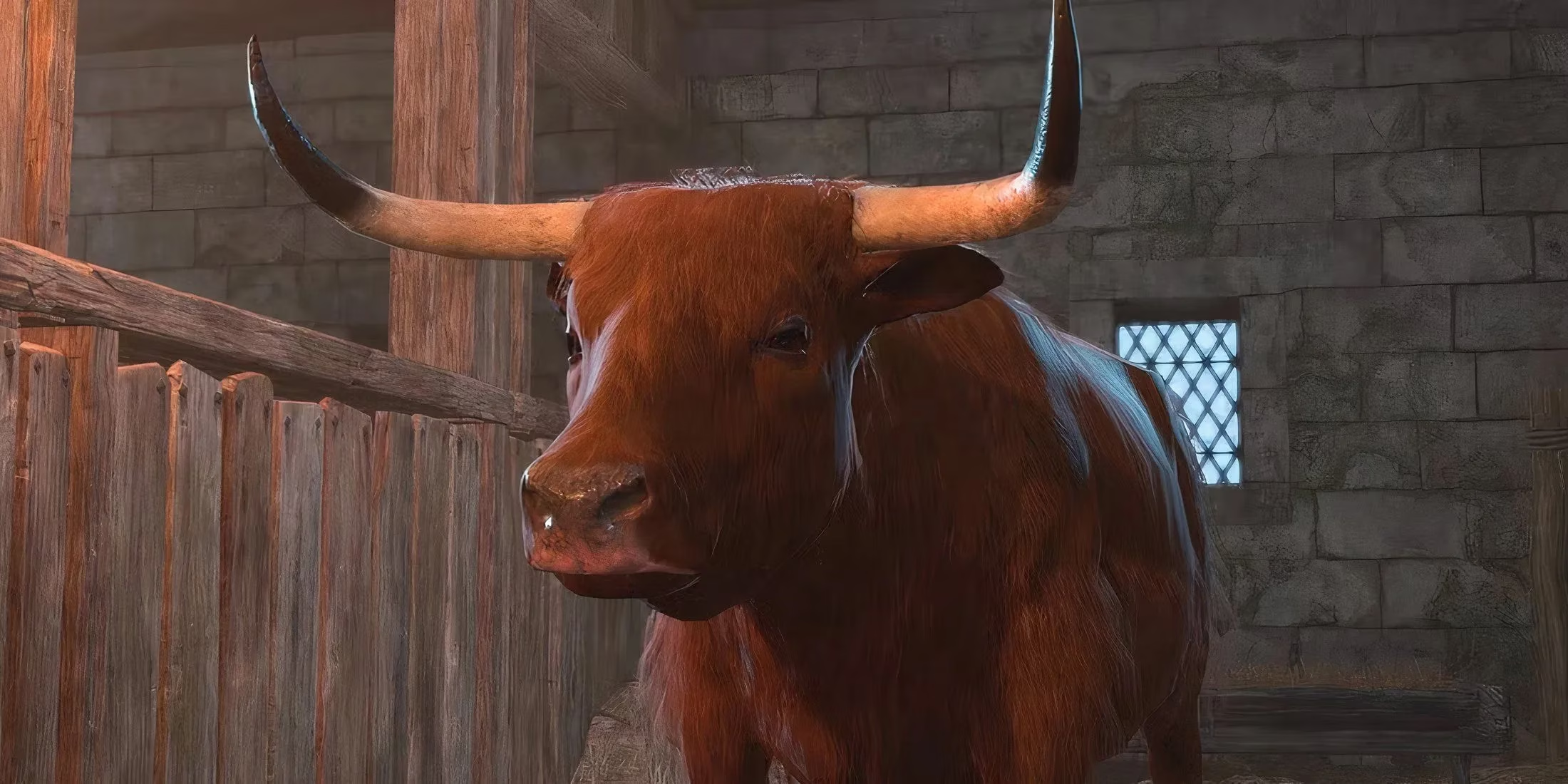
What really gets me, though, is the long game. This freaking ox shows up in all three acts. Every time, the interaction deepens. In Act 2, you might run into it again at the Last Light Inn, still being an enigma. By Act 3, you’re helping it sneak into Baldur’s Gate itself. And if you’ve stuck with it, you’re rewarded with something genuinely epic: either a memorable, high-stakes fight or a powerful ally for the final battle against the Absolute. That’s a recurring side story that never demanded a quest log entry or a giant neon sign. It’s a slow burn that pays off big time. As a DM, this taught me to trust the table’s rhythm. I’ll toss in a quirky NPC early on, maybe improvise some weird behavior in session one, and then bring them back six months later. The payoff when players realize “that random farmer was actually a polymorphed archdruid” is chef’s kiss. No extra prep needed—just a note, a little consistency, and a willingness to let the table’s memory do the heavy lifting.
Now, let’s talk world-building, because the Strange Ox is practically a masterclass in it. The Forgotten Realms feel alive in BG3 not because of the big, sweeping lore dumps, but because of the tiny, unexplained threads begging to be pulled. The ox hints at a whole hidden backstory—where it came from, what it’s seen, why it desperately needed to reach the city. And honestly, we never get a neat, wrapped-up answer. That lack of closure isn’t sloppy design; it’s a feature. It makes the world feel bigger than the party’s journey, like there are stories simmering just out of sight. For my D&D games, I’ve stolen this approach shamelessly. Not every mystery needs a solution. Let players wonder about the true nature of that sentient sword or the creepy doll that keeps reappearing. That unanswered question lingers in their minds and breeds the kind of organic engagement you can’t just script.
There’s a special kind of magic in how this ox interacts with the player, too. If you attack it early, you miss everything. If you talk to animals, you step into a whole new layer of the game. It’s a brilliant reminder that D&D is built on choices that ripple outward. I’ve started designing NPCs who react dramatically to small player decisions—like a street urchin who becomes a major faction leader later, but only if you shared some bread in session three. The Strange Ox’s arc is basically a blueprint for turning an inconsequential side note into an unforgettable emotional anchor. And let’s be real: it’s hilarious that a giant space cow managed to teach me so much about narrative pacing.
Tactically, BG3 also shows how to apply video game logic to the tabletop without losing the soul of D&D. The ox’s “bloody visions” are a perfect soft warning. In my campaign, I might have a mysterious figure share cryptic dream sequences that foreshadow a huge reveal, just like the ox’s aggression hints at its true power. It’s all about layering information so that the big moment feels earned, not dumped.
So yeah, even in 2026, with all the insane build guides and mods that let you romance literally every goblin, the Strange Ox remains my favorite lesson from Baldur’s Gate 3. It taught me that immersion isn’t just about high-res maps or epic boss music—it’s about the quiet, persistent weirdos that share your journey in the background. Next time you’re prepping a session, think about your own Strange Ox. Drop in something that makes your players scratch their heads and ask, “Wait, did that cow just call me a moron?” Trust me, they’ll remember it for years.