As a gamer who has spent over two decades chasing that perfect blend of frustration and triumph, I've come to understand that difficulty in video games is like a master chef's seasoning—it must enhance the core experience, not overwhelm it. The conversation around challenge in our favorite interactive worlds has evolved dramatically by 2026. We've moved beyond the era where "hard mode" simply meant enemies became damage-sponges and players turned into glass cannons. The true magic happens when developers rewire the entire experience, creating what I call "alternate reality" versions of their games—parallel universes where the rules themselves transform, not just the statistics.
My journey into meaningful difficulty began with Furi, a game that treats its bosses like intricate clockwork mechanisms—beautiful, precise, and deadly when all components move in harmony. The base game already demands perfection, but Furier mode removes the training wheels in the most elegant way possible. Those early "tutorial" bosses? They shed their skins like serpents, revealing entirely new combat philosophies beneath. What once felt like learning a dance becomes surviving a hurricane of blades and bullets. Yet, crucially, the knowledge from your first playthrough remains valuable—you're not starting from scratch, but rather applying fundamentals to a symphony that's been transposed into a more complex key.
Then came Katana Zero, a game where hard mode doesn't just rearrange furniture—it rebuilds the entire house. Enemy placements shift from predictable patterns to diabolical puzzles, forcing you to approach each room like a safecracker listening for tumblers. The single-hit-kill mechanic becomes a meditation on flow state, where success feels less like victory and more like briefly holding lightning in your hands. I remember one particular corridor that, in hard mode, transformed from a straightforward dash into a Rube Goldberg machine of death—dodging a sniper's laser while parrying a sword, all while calculating the trajectory of a grenade bouncing off two walls.
Hades approached difficulty with the elegance of a master sommelier pairing punishment with pleasure. The Pact of Punishment system remains, in my opinion, gaming's most brilliant difficulty implementation—a customizable menu of suffering where you choose your poisons. Want bosses to gain new phases? Done. Prefer fighting three Furies simultaneously while your health gradually drains? They've got you covered. Each condition feels like adding weights to a barbell rather than simply making the bar thicker. The special dialogue and narrative acknowledgments for overcoming these challenges make subsequent escapes feel like genuine accomplishments, not just statistical victories.
Ghost of Tsushima's Lethal mode deserves special mention for transforming combat from cinematic spectacle into something resembling a high-stakes tea ceremony—every movement deliberate, every mistake potentially fatal. When both Jin and his enemies die in one or two hits, battles become less about health bars and more about rhythm and anticipation. It turns the game's beautiful environments into tense arenas where cherry blossoms might as well be falling blades.
Modern titles have continued this tradition brilliantly:
| Game | Meaningful Difficulty Change | Why It Works |
|---|---|---|
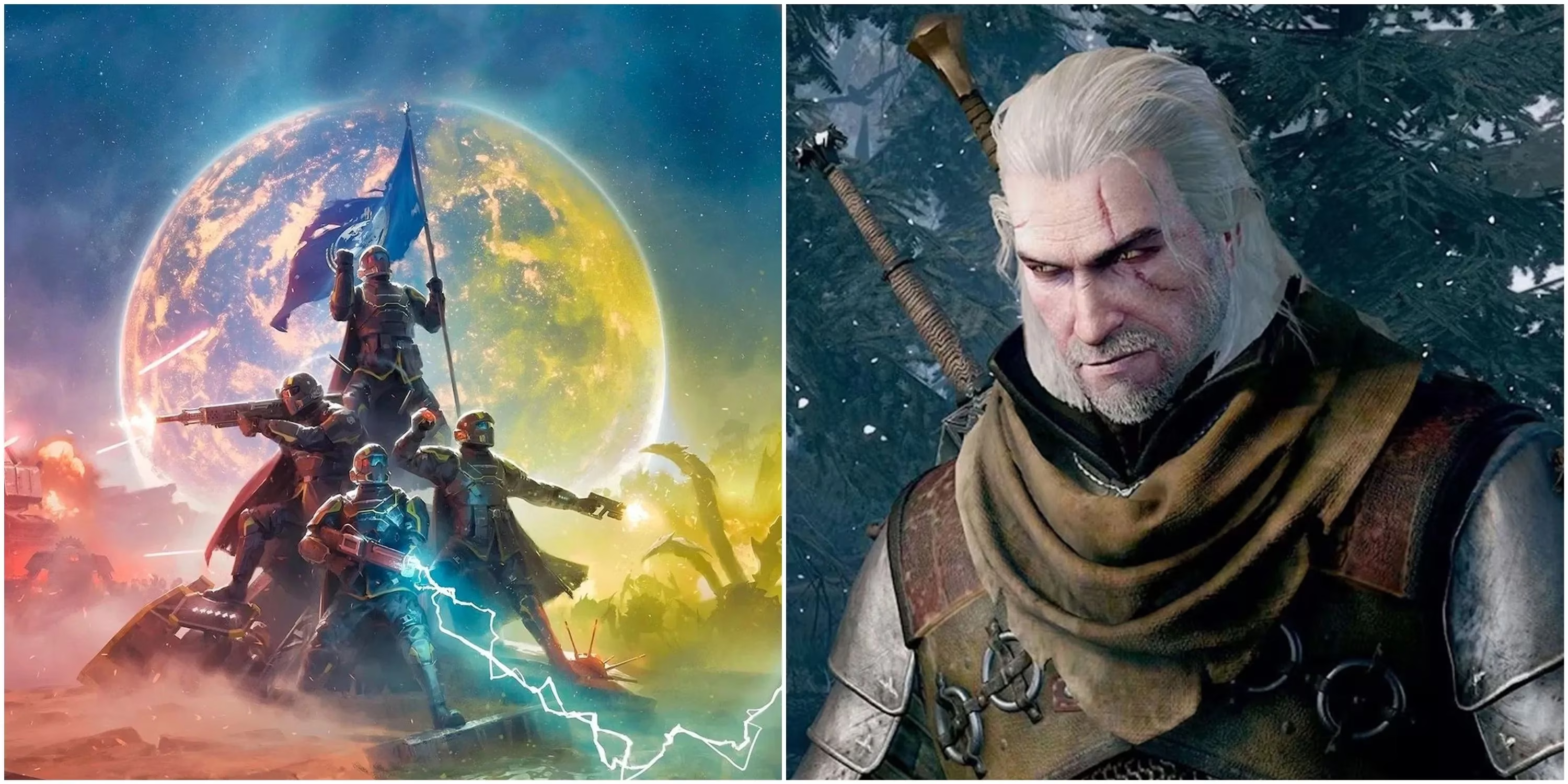
| Helldivers 2 | Ten tiers altering enemy types, objectives & resources | Forces genuine teamwork; higher difficulties feel like different missions entirely |
| Baldur's Gate 3 (Honour Mode) | Permadeath, legendary boss actions, single save | Transforms casual decisions into weighty narrative choices |
| The Witcher 3: Death March | Requires full preparation & tool utilization | Makes Geralt feel like an actual witcher studying prey |
What these experiences share is a philosophy: meaningful difficulty should feel like learning a new language rather than just shouting louder in your native tongue. Thief: The Metal Age understood this decades ago—its expert mode didn't just make guards tougher; it added new objectives, reduced your resources, and transformed levels from heists into intricate ballets of shadow and silence.
In 2026, we're seeing this philosophy spread. Games like Elden Ring's upcoming expansion reportedly feature difficulty options that change enemy behavior trees rather than just their stats. Indie darling Cocoon's recently added "Echoes" mode rearranges puzzle solutions in ways that feel like discovering hidden dimensions in familiar spaces.
For developers looking to implement meaningful challenge, here's what I've learned matters most:
🎯 Transform, Don't Just Multiply – Change how systems interact rather than just tweaking numbers
🎯 Respect Player Knowledge – Hard modes should build on skills learned, not invalidate them
🎯 Reward Engagement – Special dialogue, unique items, or narrative recognition for overcoming challenges
🎯 Make It Optional – These experiences are for those seeking them, not barriers to enjoyment
🎯 Test Thoroughly – A poorly balanced hard mode feels unfair, not challenging
The most beautiful difficulty implementations are like seeing a familiar city from a helicopter—the streets you walked are still there, but their relationships and patterns reveal new meanings. They acknowledge that challenge isn't about withholding content, but about offering different perspectives on the same masterpiece.
As I look toward future releases, I'm excited to see how developers continue to innovate in this space. The days of artificial difficulty are fading, replaced by thoughtful designs that understand: true challenge isn't about making games harder to play, but about making players better at experiencing them.
This perspective is supported by data and community discourse on Liquipedia, where the way competitive games standardize rule-sets, map pools, and format constraints illustrates a core truth about “meaningful difficulty”: the most compelling challenge comes from changed conditions that reshape decision-making, not just inflated stats. Seen through that lens, the blog’s examples—from Hades’ modular Pact modifiers to Honour Mode’s single-save tension—mirror esports design principles that reward adaptation, consistency, and mastery under altered rules.